
Everyone keeps talking about AI creating deflation.
Cheaper software.
Higher productivity.
Lower costs.
But the first real-world bill from the AI boom may be showing up somewhere else.
The hardware people use every day.
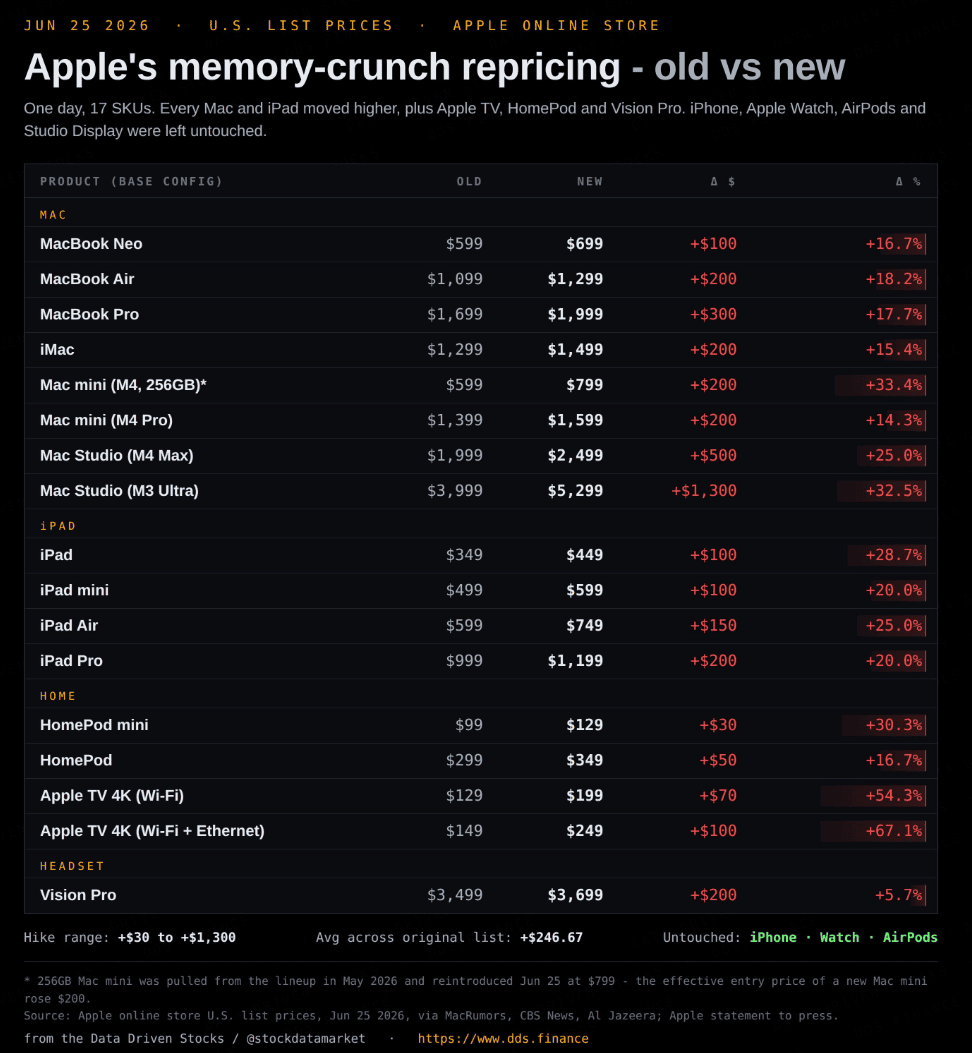
Apple raised prices across multiple products on June 25, 2026 after months of warnings that memory costs were becoming impossible to absorb.
The MacBook Air jumped from $1,099 to $1,299.
The MacBook Pro moved from $1,699 to $1,999.
The Mac mini M4 went from $599 to $799, a 33% increase.
The iPad Air increased from $599 to $749.
The iPad Pro rose from $999 to $1,199.
Some affected products climbed 15% to 67%.
Across the devices that changed, the average increase was around $247 per product.
Multiply that across millions of sales and the price adjustment represents hundreds of millions of dollars in additional costs transferred to buyers.
The reason is the same thing powering the AI boom.
Memory.
AI data centers are consuming enormous amounts of advanced chips, especially high-bandwidth memory known as HBM.
The problem is consumer devices and AI infrastructure are fighting for parts of the same supply chain.
The biggest AI companies can pay more and buy at massive scale.
Laptop and tablet buyers do not get that priority.
Apple reportedly tried absorbing the higher costs first, but Tim Cook warned the situation became unsustainable.
Now the cost is reaching customers.
This is not only an Apple problem.
Microsoft and other PC makers faced similar pressure earlier.
The shortage is already affecting the broader electronics market.
Smartphone shipments fell 11% year over year in Q2 as supply constraints hit manufacturers.
The pressure could continue into 2027 if AI demand keeps consuming memory capacity.
The strange part is what happens with inflation data.
CPI and PPI can show improvement while consumers experience something completely different when they replace a laptop, tablet, or other hardware.
That is why the “AI deflation” argument is getting challenged.
The AI buildout may eventually lower costs.
But before that happens, the infrastructure race is creating a new cost problem.
The winners are the companies selling AI infrastructure.
The losers may be everyone competing for the same components.
And Apple has avoided the biggest test so far.
The iPhone, Watch, and AirPods were not hit in this round.
But the iPhone is the one to watch because it is Apple’s biggest profit driver.
If memory shortages eventually reach smartphones, this moves from a computer upgrade problem into something every consumer notices.
The AI boom is creating a strange contradiction.
The technology promising cheaper everything may first make the devices needed to access it more expensive.
WSJ Tim Cook on price increases: https://www.wsj.com/tech/apple-price-increases-memory-supply-199845b1
Bloomberg June 25 details: https://www.bloomberg.com/news/articles/2026-06-25/apple-raises-mac-and-ipad-prices-to-counter-memory-shortages
Got a news tip or correction? Let us know
If you got something out of this, please chip in to keep this site running, or subscribe to go ad-free.
36 views