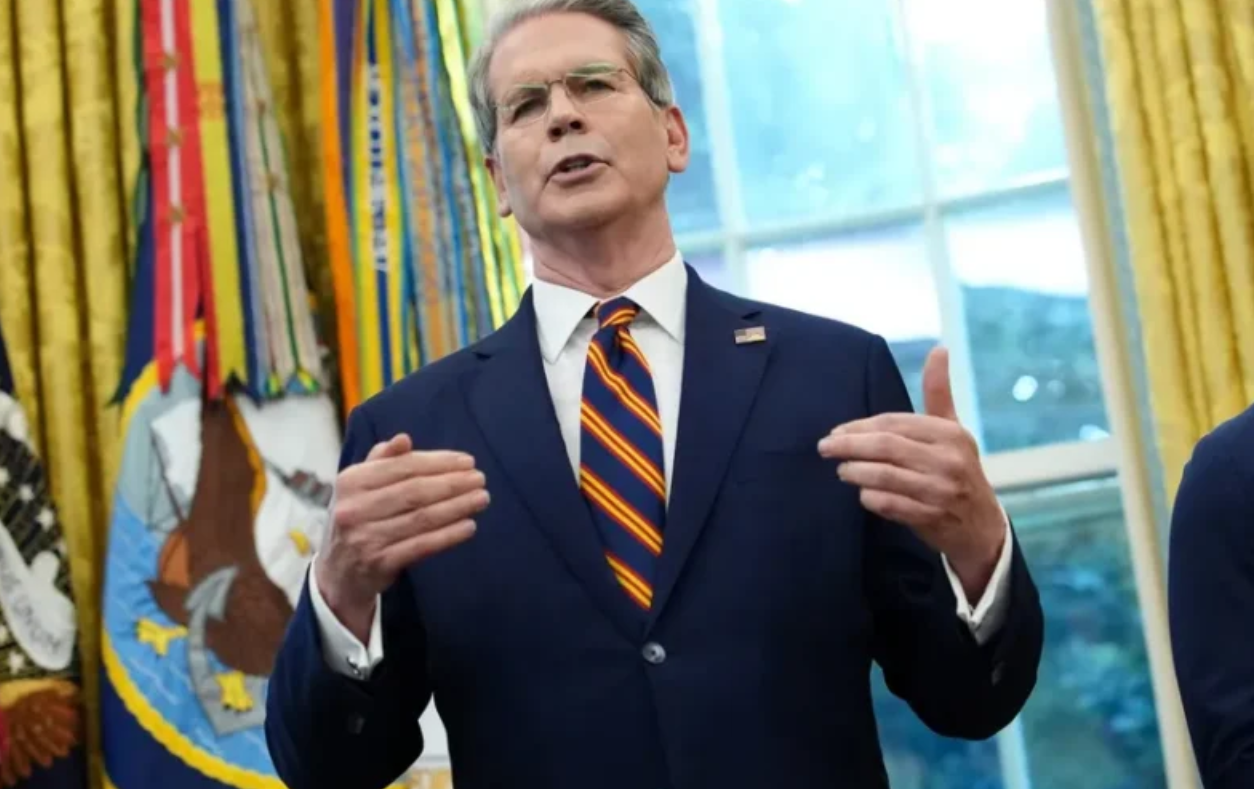
Two weeks ago I flagged Scott Bessent’s Fox Business comments on gold as worth watching. He confirmed Fort Knox’s holdings are “present and accounted for,” valued at over $1 trillion at current market prices, and noted the dollar “used to be backed by silver, sometimes gold.”
Now Bessent has clarified what he meant. And the clarification is almost more interesting than the original comment.
In a follow up appearance, Bessent repeated the $1 trillion figure, then added the part that didn’t make headlines the first time around: the gold “doesn’t matter” for the value of the dollar. His exact framing was that the U.S. operates on a fiat system now, so the reserve, however large, has no bearing on the dollar’s worth.
That’s a strange thing to volunteer. If the gold truly doesn’t matter, there’s no need to bring it up at all, let alone twice, in back to back interviews. Instead the Treasury Secretary keeps finding reasons to talk about it.
A few other threads worth noting from the past two weeks:
Peter Schiff publicly called out Bessent for suggesting old gold and silver certificates could still be redeemed for metal. They can’t. Redemption ended in 1933 for gold and 1968 for silver. Schiff’s point wasn’t really about the certificates. It was that if the Treasury Secretary is fuzzy on basic monetary history, his assurances about the vault itself carry less weight.
Meanwhile the backdrop keeps building. France pulled all 129 tons of its gold out of the New York Fed and moved it to Paris, banking $15 billion in the process. Canada stood up a $25 billion sovereign wealth fund explicitly to reduce reliance on the U.S. The European Central Bank’s June report showed gold now makes up 27% of global official reserves, ahead of both the dollar and the euro individually.
None of this means the dollar is being repegged to gold tomorrow. But you don’t get a Treasury Secretary repeatedly raising the size of the gold stockpile, in the same breath as insisting it’s irrelevant, in a vacuum. Something is shifting in how officials are positioning the conversation around hard assets, even while they publicly downplay it.
Got a news tip or correction? Let us know
If you got something out of this, please chip in to keep this site running, or subscribe to go ad-free.
86 views