Below, we look at lessons from Japan and its latest signals to prepare for a market sell-off, a debasement acceleration and a golden endgame.
Pattern Recognition
My father taught me long ago that the years teach things the days do not always notice.
In all areas of our lives, we slowly acquire perspectives earned by experience over theory and by time rather than guesses.
This is equally true of lives spent investing in markets and cycles. A certain pattern recognition is acquired that not even a Bloomberg terminal or AI robot can teach.
As one, for example, who traded through a dot.com bubble led by the undeniably transformative technology of the internet of all things, I remember well how everyone from Wall Street experts to Hollywood movies made it clear that names like Cisco, Yahoo and AOL were kings who would never be dethroned.
That felt very exciting.
At least until the NASDAQ lost 78% and two of those “kings” were carried off the market on their shields, while Cisco, which at least survived the carnage, would never be the same again.
Those days and years are now teaching us yet another lesson, one whose pattern few wish to see, for the simple reason that many are not, or never were, paying attention.
And as for such patterns or lessons, what very few are seeing today is that Japan’s JGB, yen and Nikkei have just given us a familiar road map for what lies ahead for America’s Fed, dollar and S&P.
I Think We’re Turning Japanese (Yes, I Really Think So)
What is happening this year in Japan goes well beyond the otherwise significant conversations on the Japanese “Carry Trade.”
As bond jocks constantly remind us of boring things like sovereign debt yields, it can often be too boring (or too scary) to confront.
Like the sun, topics like death and bond markets are often hard to look at directly.
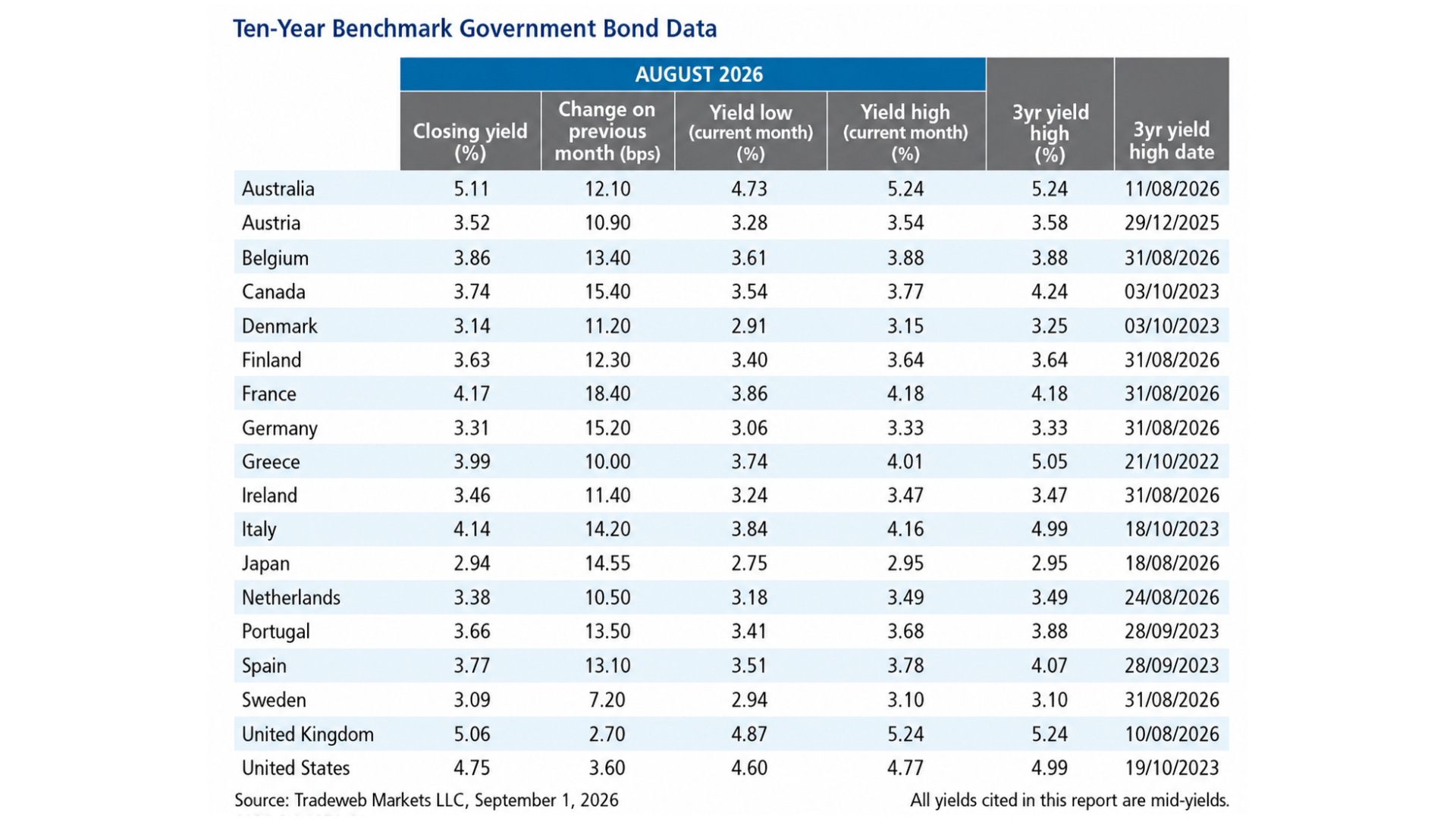
The fact, for example, that the yield on the Japanese 30Y JGB just hit over 4.18% for the first time in its history may seem like a yawn to many otherwise doom-scrolling through the latest war, AI meme or DC scandal de jour.
But this historical yield spike out of Tokyo is far more than just another bond signal—it’s a harbinger of things to come in your own backyard (and wallet).
The Canary in a Coal Mine
Much like the USA, today’s Japan (which is the world’s 3rd largest economy) is a paper tiger built on extraordinary debt (greater than 200% of its total economy) and a bond and hence stock market entirely supported by (and correlated to) a central bank fatally addicted to printing (debasing) trillions worth of its currency to keep its illusion of economic survival going.
If this profile looks a lot like America’s and Europe’s, that’s because Japan is just a canary in the Western coal mine. Where it goes, we shall follow.
In fact, Japan’s sins are in many ways our own, especially America’s.
Blame It on the Experts
Just after the Nikkei literally died in 1989, a then-ambitious and much younger Ben Bernanke gave Tokyo a handbook to print their way out of collapse.
Bernanke would use a similar handbook when U.S. markets tanked years later in 2008. As we are now discovering, his expertise was anything but expert.
But during this period of mass MMT delusion and massive currency debasement, Wall Street was betting for years (decades) that Japan’s debt levels would eventually implode under inevitably rising bond yields (and hence debt costs).
For literally decades, Wall Street mavericks were betting big on a yield spike that would re-crush the Nikkei and JGB in one big headline.
But this headline never came, and the foregoing bet against Japan became known on the Street as the “widow maker.”
Buying Time, Postponing Pain
Instead, the BoJ bought itself decades of time and a market recovery by printing just unthinkable levels of yen to keep JGBs (Japanese bonds) bought and the Nikkei higher.
For the near entirety of my career, this kept Japanese yields at zero to negative, buying time while crushing those who bet against Tokyo.
Which brings me back to that boring 4.18% record yield on the 30Y JGB.
This figure confirms that the dam has finally broken on the broken Japanese “plan.”
Or to use the analogy above, the canary in its coal mine just died.
For those paying attention, these rising yields just caused the Nikkei 225 to lose 200B in a single day, and this sell-off was led by the so-called “Immortal” tech kings, you know, the kind which were never supposed to fall—like AOL, Yahoo or Cisco of old.
The Sickness is Global and Currency-Killing
But what happens in Tokyo doesn’t stay in Tokyo.
Yields across the “developed” world have been rising to decade highs because the bond markets are now showing more honesty than central bankers, from Tokyo to DC.

As the yield on the Bloomberg Global Sovereign Bond Index shoots past 3.72%, yields from Australia and the UK to Germany and the USA are skyrocketing to untenable levels.
The bond market is essentially asking for more risk premium (yield) on government IOUs that are no longer trusted.
Given this global debt fiasco, is it therefore any surprise that the global broad money supply of printed paper currencies, which hit $150 TRILLION in June, has increased by a staggering 50% since 2020?

Such open currency debasement now hiding in plain sight not only explains why currencies like the USD have lost 87% in absolute purchasing power since decoupling from gold in 1971, it further explains why the world’s central banks are stacking gold at an unprecedented pace in 2026.

Physical gold is no longer an allocation or dollar “debate”; it is the open and now obvious puck direction of global collateral and the de facto international reserve asset above tanking currencies and unloved sovereign IOUs.
This is not fable but fact.
Stocks vs. Gold
But equally worth noting from the Japanese tech sell-off of late is what it reminds as to the dot.com era of yesterday and what it portends for the AI era/market of tomorrow.
Unlike the aforementioned bloodbath during the internet bubble, today’s U.S. stock market is literally being kept alive by an equally game-changing technology meme with an even greater profile of over-investment ($400B this year alone by the leading tech names), which always moves from over-bought to over-sold.
With U.S. public debt crossing 40T as rates rise to levels costing Uncle Sam (i.e. you) over $3B/day to service the interest expense, the convergence of a credit crisis is about to slam into a dying PE market, an already dead private credit market and an over-valued and over-hyped AI sector.
This suggests that what we just got a glimpse of in Japan (as to both its markets and currency) is an undeniable warning of what is to come to the U.S. NASDAQ and dollar.
Be Prepared
Timing this convergence is a mug’s game. Preparing for it is not.
Even if central banks like the Fed or BoJ “save” the markets with mouse-clicked trillions, the currency destruction necessary to support those “resilient” markets is robbing you in plain sight.
The Nikkei, for example, has seen an impressive 145% gain in the last five years, yet when measured in gold terms, the result was a net loss of -31%.
During that same period, the NASDAQ 100 has shown an impressive nominal return of 95%, yet when measured in gold, the net result has been a loss of -23%.
And if any of you were being told by your advisors over the last 12 years that USTs were the key to your safe retirement, the “risk-free returns” of Uncle Sam’s IOU, when measured against gold, have lost you 90%.
See the theft? See the real measure of wealth?
Given the foregoing interplay of rising rates, tanking bonds, debased currencies and hyper-risk in the tech sector, an allocation to physical rather than paper gold is the only asset separating the informed from the uninformed, and the wealth-protected from the wealth-destroyed.
Got a news tip or correction? Let us know
If you got something out of this, please chip in to keep this site running, or subscribe to go ad-free.
93 views