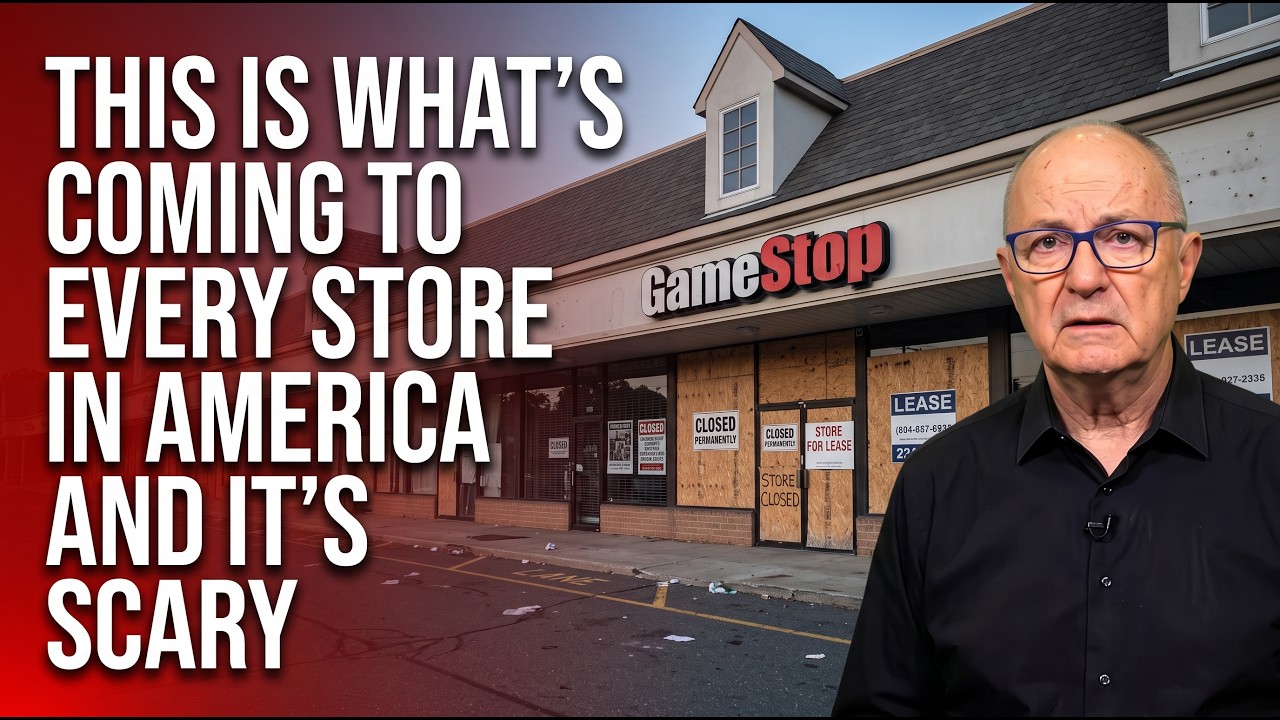
Store closings are moving faster than the announcements. In this video, Americans film what is
left after the doors shut — a mall down to a single open store, a GameStop chain vanishing from
Long Island, a Starbucks marked permanently closed, a 70-year-old Chicago shop that did not make
it to 71, a pharmacy pulling its shutters down, empty windows on Rodeo Drive, and three malls
counting down their last weeks.
What follows a closure is never in the press release. The anchor store goes, the center loses its
traffic, the small shops that lived off that traffic go inside of two years, and the tax base goes
with them. One closure in one town is a headline nobody outside it reads. This many is a
structural change — and it is happening while the official numbers still say the consumer is fine.
Both are true at once, because the spending is concentrating: moving online, moving to a handful
of chains, and draining out of the places built for a country that shopped locally. Nobody is
tracking how many corridors go dark in a single county, and nothing exists to put anything back.
Got a news tip or correction? Let us know
If you got something out of this, please chip in to keep this site running, or subscribe to go ad-free.
151 views