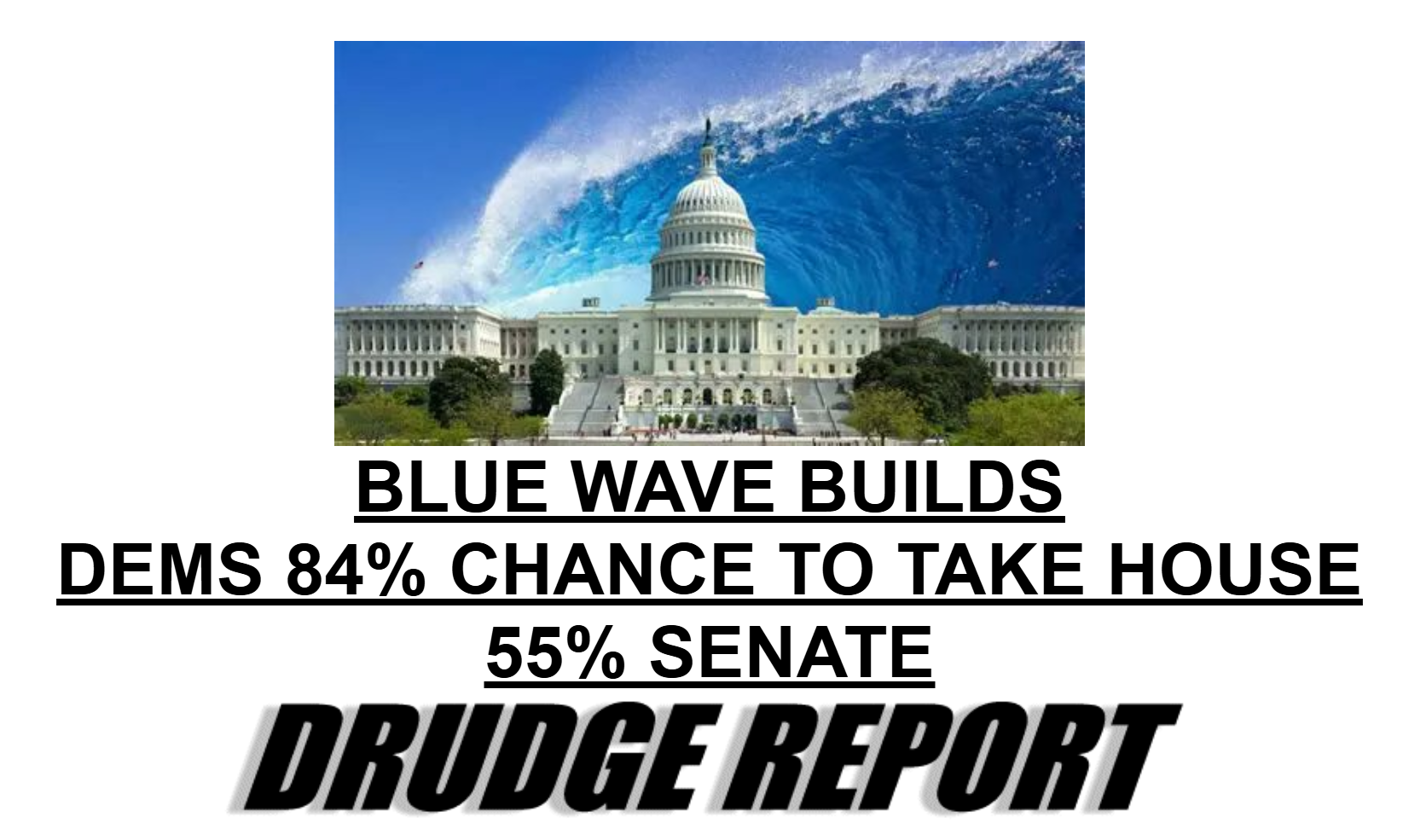
The Washington Post is calling it a possible midterm wave. At this point, there is actual evidence behind the optimism.
The national generic ballot has moved hard toward Democrats. RealClearPolitics had the Democratic lead at 8.7 points on Sept. 17, up from 5.7 points on Sept. 1. That is a larger lead than either party had at this point in any midterm since 2010.
And this isn’t only showing up in national polling.
Cook’s latest survey of 37 competitive House districts has Democrats ahead 49% to 47%. Those are the districts that actually matter for flipping the House. Democrats only need a net gain of three seats.
The Senate picture has also changed.
Democrats need a net gain of four seats. Earlier in the cycle, the path was concentrated in a small group of states. Now races in places like Iowa and Texas are getting serious attention, while Republicans are having to defend seats in states that were previously viewed as much safer.
The political environment underneath the polling is also moving in the same direction.
A Reuters/Ipsos poll had Democrats ahead 44% to 37% on the generic congressional ballot. Trump’s approval was 35%, and Democrats had moved ahead of Republicans, 38% to 37%, when voters were asked which party was better at handling the economy.
Gas prices and the cost of living are adding another problem for Republicans. The Iran war has pushed fuel prices higher, while voters continue to complain that everyday costs are too high. The Washington Post reports that these issues, combined with Trump’s approval ratings, are driving growing Democratic confidence.
There is still a difference between having a favorable national environment and actually winning every race needed to control Congress. Michigan is a good example. Voters there preferred Democratic control of the Senate by 53% to 38%, yet the actual Senate race was only 48% to 45% in the latest Washington Post-Schar School poll.
That gap matters.
But it doesn’t erase what the evidence is showing right now.
The Democratic advantage isn’t coming from one weird poll. It’s showing up across the generic ballot, competitive House districts, Senate battlegrounds, presidential approval, the economy, and the cost-of-living issue.
Republicans still have enormous amounts of money to spend before Election Day. The Wall Street Journal reported today that Republican-aligned groups have already reserved hundreds of millions of dollars in advertising, including $82 million from No Going Back PAC and $173 million from the Senate Leadership Fund.
So there is plenty of time for the numbers to change.
But pretending the Democratic midterm opportunity is just media hype doesn’t fit the evidence anymore.
Got a news tip or correction? Let us know
If you got something out of this, please chip in to keep this site running, or subscribe to go ad-free.
1 view