The Senate didn’t just stumble over another spending bill.
It stalled a $1.15 trillion National Defense Authorization Act.
The vote failed 50 to 46.
It needed 60 votes just to begin debate.
That almost never happens.
The NDAA has been one of Congress’s most reliable bipartisan bills for decades.
This time was different.
The obvious reason was Iran.
Democrats argued Congress shouldn’t approve one of the biggest military budgets in U.S. history while the administration’s military campaign against Iran continues without a broader congressional debate.
But that wasn’t the only fight.
Several senators also objected to provisions expanding U.S.-Israel defense cooperation.
One proposal would create a Pentagon position dedicated to coordinating U.S. and Israeli defense technology.
Another would expand intelligence sharing.
Another would increase cooperation between both militaries.
Those aren’t minor changes.
They’re structural.
Outside Congress, 14 organizations, including the ACLU, J Street, CODEPINK, and Win Without War, urged senators not to move forward unless lawmakers were allowed to vote on restricting funding for the Iran war.
Then look at the politics.
A Reuters/Ipsos poll found Democratic support for Israel fell from 59% in 2018 to 22% in May 2026.
That’s not a small shift.
That’s a party undergoing a major change in opinion.
The media battle is becoming part of the story too.
American media sides with israel over an American congressman with video evidence
Now add another piece.
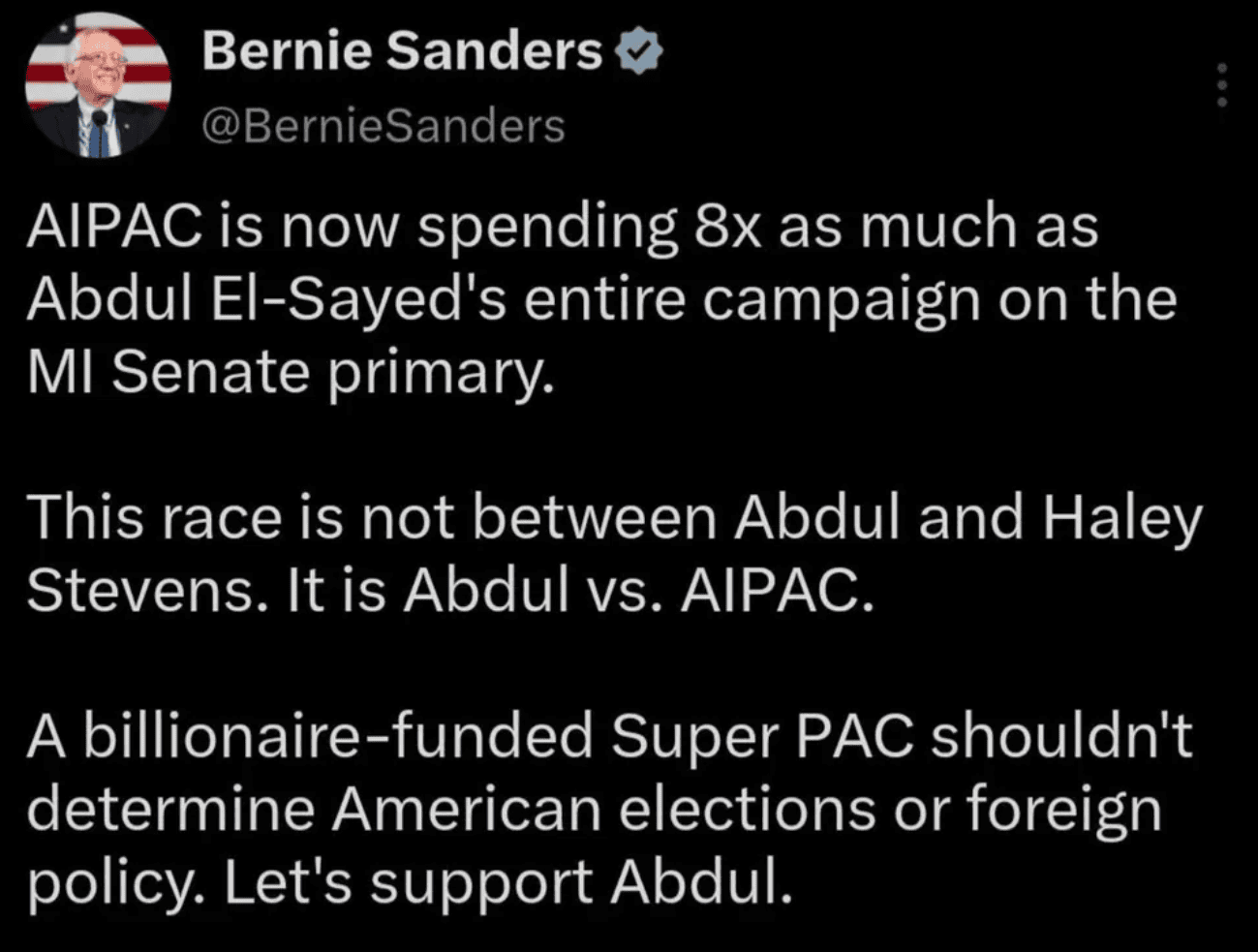
In Michigan, groups supporting pro-Israel candidates are reportedly outspending Abdul El-Sayed by roughly 8 to 1.

Whether someone sees that as normal political advocacy or excessive influence, it adds another layer to an argument that’s becoming harder for politicians to avoid.
Money.
Foreign policy.
Campaigns.
Congress.
People are connecting those dots.
The biggest story isn’t that one bill failed.
It’s that issues once treated as routine are now producing open fights inside Congress.
Foreign policy.
Military spending.
Oversight.
The role of allies.
Those debates aren’t staying inside Washington anymore.
They’re becoming election issues.
That’s why this vote matters.
Not because one bill stalled.
Because it showed there are now disagreements that Congress can no longer quietly vote past.
Got a news tip or correction? Let us know
If you got something out of this, please chip in to keep this site running, or subscribe to go ad-free.
28 views