Donald Trump’s approval rating remains at 32%, according to the latest Reuters/Ipsos poll, while only 31% of Americans support the war with Iran. The Republicans have lost control of Congress, and the most revealing part of the midterm election is not how many voters switched to the Democrats. It is how many Republican voters simply stayed home. An analysis by J.L. Partners found that 35% of Trump’s 2024 voters did not participate in the November 3 midterms, compared with 22% of those who voted for Kamala Harris. Nearly half of his non-college-educated supporters failed to turn out. This is a serious warning about the economic and political consequences of a war that Americans never expected to become the centerpiece of this administration.
The Republicans should examine those numbers before blaming their defeat entirely on the Democrats, the media, or disloyal voters. Among Trump’s 2024 supporters, 46% of those without a college degree, 39% of rural voters, and 44% of those over 65 did not vote in the midterms. These are groups that helped build his political coalition. Another analysis of 13 states by election researcher Lenny Bronner estimated that roughly 75% of Democratic gains came from turnout differences, while approximately 20% came from voters switching from Republicans to Democrats. These are analytical estimates rather than a definitive national count, but they point toward something important. Many voters who supported Trump in 2024 did not necessarily become Democrats. They simply did not return to the polls in 2026.
There is an economic explanation that Washington cannot afford to ignore. Americans have spent years struggling with prices that rose sharply following the pandemic. The inflation rate may have declined from its peak, but that does not reverse the cumulative increase in the cost of living. Food, housing, insurance, utilities, and basic services remain considerably more expensive than they were in 2020. Trump did not create the inflationary consequences of the pandemic, the enormous expansion of government spending, or the monetary policies that accompanied it. He inherited an economy in which the purchasing power of wages had already been severely damaged. But the decision to enter a war with Iran introduced another major shock into an economy that was already under pressure.
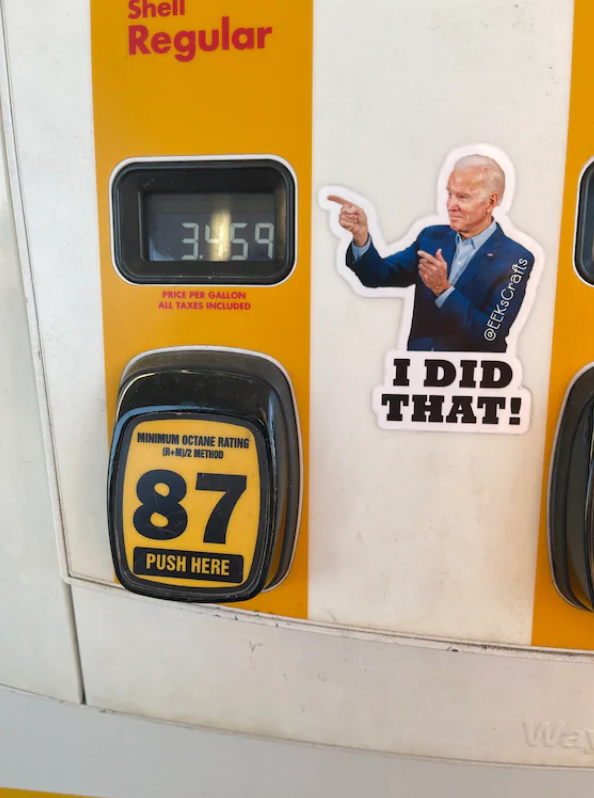
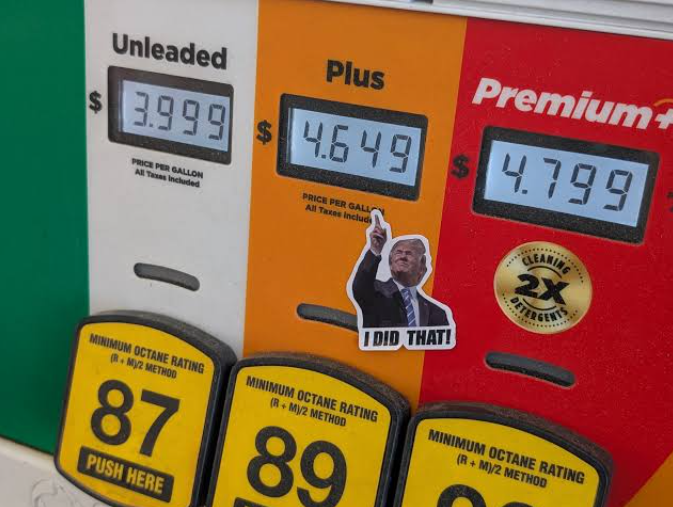
Energy is the critical link between foreign policy and the American household. The conflict with Iran has disrupted oil markets and pushed fuel prices higher. Average gasoline prices during Trump’s current term had risen above the average recorded during Biden’s presidency. Lower energy costs were among the economic improvements Americans expected. We all remember the “I did that” stickers on gas pumps across the country.
Trump’s supporters did not necessarily expect every price increase to disappear when he returned to office. They did, however, expect an administration focused on restoring domestic economic stability rather than committing American resources to another prolonged Middle Eastern conflict. Trump built considerable support by criticizing the endless wars that consumed American lives and taxpayer funds without producing lasting political stability. The war with Iran has now created precisely the kind of open-ended financial and military commitment that many voters believed Washington should avoid. Whatever the strategic arguments for the operation, its economic consequences are being felt domestically.
The polling demonstrates how dramatically the political environment has changed. In September, Reuters/Ipsos found that Republican approval of Trump’s handling of the cost of living had fallen from 70% in January to 44%. His approval among Republicans on the broader economy declined from 80% to 56% over the same period. An October Reuters/Ipsos survey found that 78% of Americans blamed Trump’s policies at least partly for prices rising faster than their earnings. That does not establish that his administration caused all those increases. It demonstrates that voters increasingly associate the government currently in power with their deteriorating financial circumstances. Political responsibility and economic causation are not always the same thing.
The November 16 Reuters/Ipsos survey also revealed that Trump’s Republican supporters remain relatively loyal when asked about their party’s leadership. Some 75% of Republicans expressed favorable views of Trump, while 77% viewed Vice President JD Vance favorably. That is why the turnout figures deserve more attention than the approval rating alone. A voter can continue to identify as a Republican, prefer Trump over Democratic leaders, and still become sufficiently dissatisfied or exhausted to avoid participating in an election. The difference between expressing support in a poll and actually voting can determine control of Congress.
That same Reuters/Ipsos survey found that only 34% of Democrats viewed Senate Democratic leader Chuck Schumer favorably, while 43% viewed him unfavorably. House Democratic leader Hakeem Jeffries performed better, with 40% favorable and 29% unfavorable ratings among Democrats. There is dissatisfaction across the political establishment. Americans are looking at a government that continues spending enormous sums while the basic cost of maintaining a household remains elevated. Changing the party controlling Congress does not automatically resolve that underlying economic problem.
The Republican turnout problem reflects more than one issue. Midterm participation is normally lower than presidential turnout, and younger voters, demographic changes, candidate quality, and local political conditions all influence election results. The available data do not prove that every absent Republican voter stayed home because of Iran. But the combination of declining economic approval, widespread concern over living costs, and limited public support for the war provides a compelling explanation for why enthusiasm weakened. Before the election, Reuters/Ipsos found that only 33% of Republican voters were very enthusiastic about voting, compared with 49% of Democrats. The warning was visible before a single ballot was counted.
Trump cannot reverse the cumulative inflation of the past six years with a speech or an executive order. The Federal Reserve cannot simply lower interest rates and restore the purchasing power that households have already lost. What an administration can influence, however, is whether its policies introduce additional economic shocks. The war with Iran has placed pressure on energy markets at precisely the moment Americans need relief. That is a consequence of foreign policy decisions made under this administration, even though the broader inflation problem began years earlier.
The midterms reveal the political cost of ignoring that distinction. Millions of Americans who supported Trump in 2024 were less willing to participate in 2026, while voters frustrated by the cost of living turned out in greater numbers for the opposition. This does not mean the country has suddenly embraced the Democratic establishment. It means the economic frustrations that helped return Trump to the White House remain unresolved, and the war has added another burden.
If you got something out of this, please chip in to keep this site running, or subscribe to go ad-free.
24 views