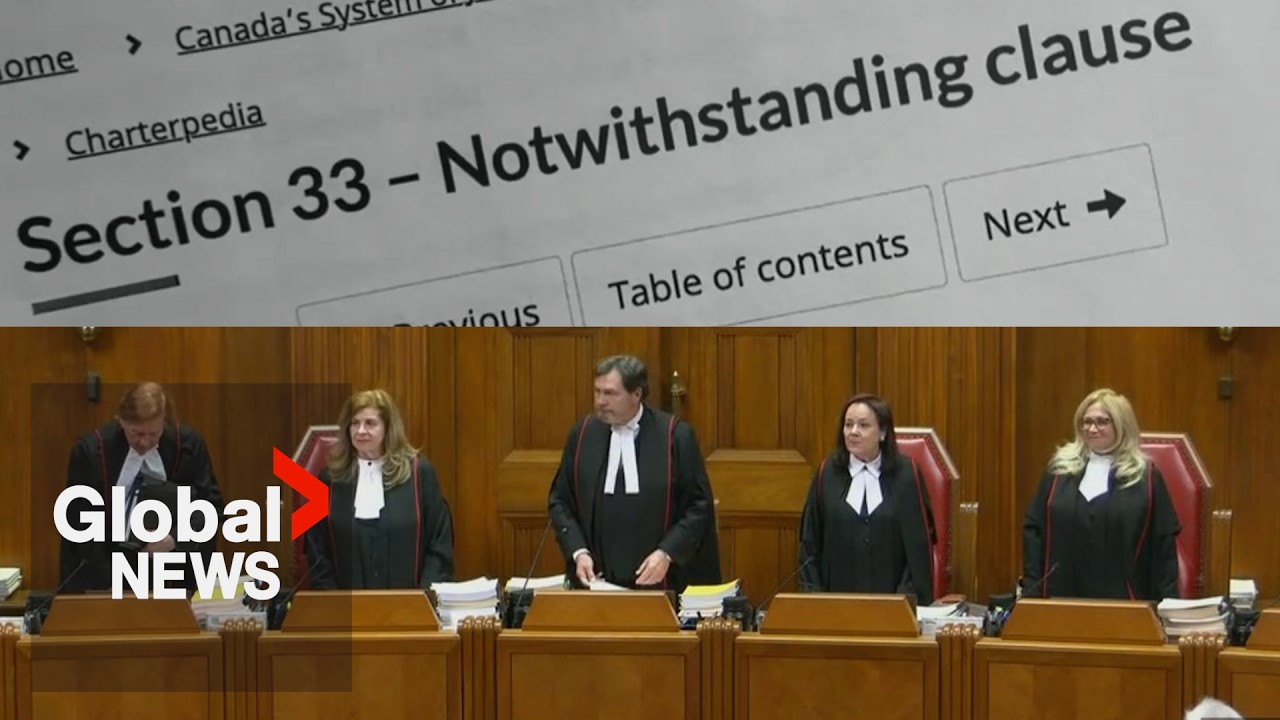
12 years of Liberal government and Ottawa still acts like the provinces are supposed to fall in line. Quebec has been fighting that mentality for years. Now the Supreme Court has backed its use of the notwithstanding clause in Bill 21.
But look at the bigger picture. Alberta has used the same clause to force striking teachers back to work. Saskatchewan used it for its school pronoun and parental-consent law. Ontario used it in its fight with education workers. These provinces aren’t even on the same page politically, but they’re all reaching for the same constitutional power.
That’s the point. Section 33 isn’t some Quebec-only loophole. Every province has it, and the Supreme Court has now made clear that judges can’t invent extra conditions to restrict its use.
https://www.scc-csc.ca/judgments-jugements/cb/2026/41231/
Ottawa wanted the court to put more restrictions on the clause. It didn’t get them. And Alberta v. Moloney doesn’t change that. Federal law wins when valid federal and provincial laws conflict, but that doesn’t give Ottawa unlimited control over provincial jurisdiction.
https://www.canlii.org/en/ca/scc/doc/2015/2015scc51/2015scc51.html
Even Alberta’s separation vote belongs in this conversation. Nearly 75% voted against starting the process to leave Canada. That doesn’t mean people are happy with Ottawa. It means staying in Canada and accepting whatever Ottawa dictates are two very different things.
https://www.elections.ab.ca/referendum/referendum-results/
Quebec’s new government is pushing provincial rights and greater sovereignty. Other provinces have their own fights with Ottawa. Maybe people don’t want to break up Canada. Maybe they just want their provinces back.
If you got something out of this, please chip in to keep this site running, or subscribe to go ad-free.
11 views