Scott Bessent just confirmed what I asserted weeks ago: namely that Iran has been using the gold and crypto markets to move capital/continue trade outside of U.S. sanctions.
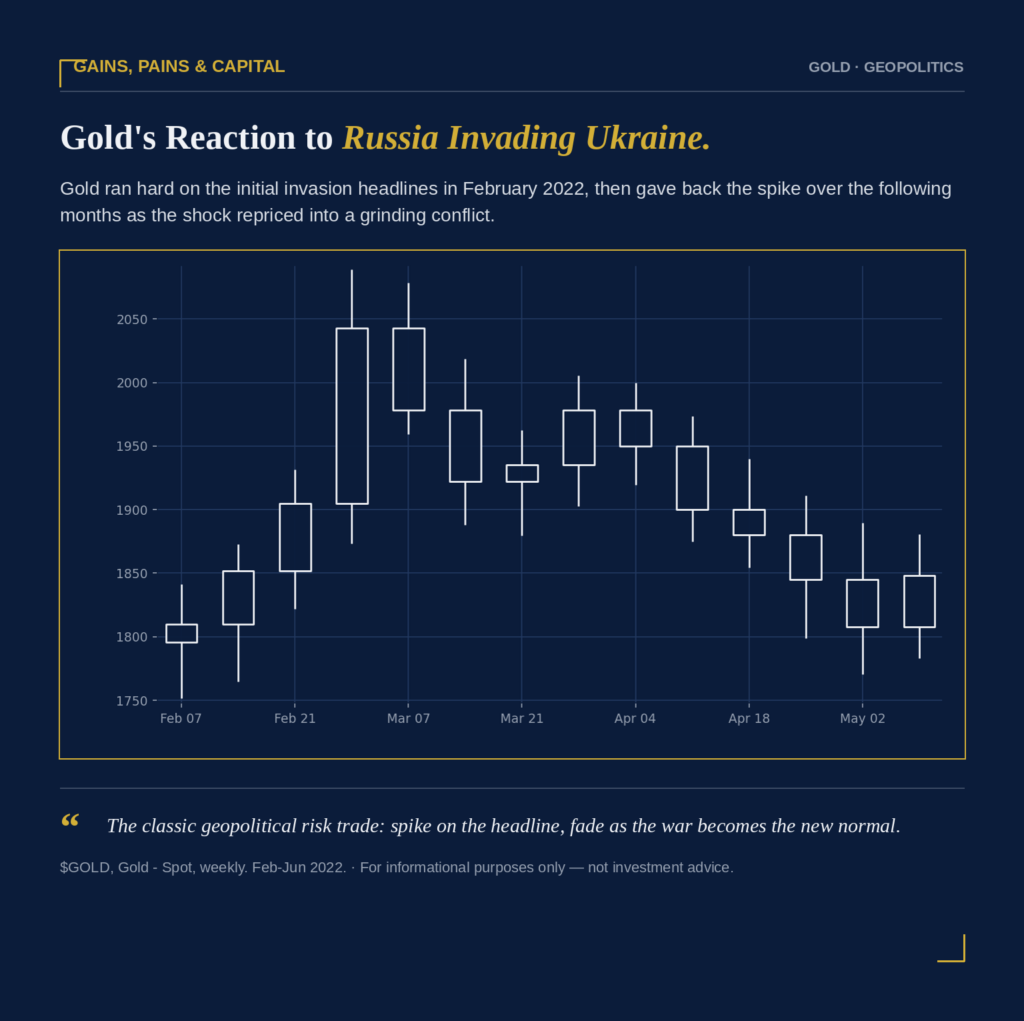
Historically, gold has been a “geopolitical risk” trade that has done well during periods of conflict.
Gold’s reaction to Russia invading Ukraine:

Gold’s reaction to 9/11.

However, gold didn’t rally when the War with Iran started. Instead, the precious metal briefly spiked on the news, and then began falling steadily.

Many analysts were dumbfounded by the move, but the implications were clear to me: that the Iranian regime was dumping gold and moving capital into crypto in order to trade around sanctions.
You can see this dynamic clearly in the below chart. Note that when the conflict in Iran first began in late February, gold initially spiked (the usual geopolitical reaction) before PLUNGING rapidly. Bitcoin held up and in fact jumped several times during the month of March despite traditionally being a “risk asset” that falls when the financial system moves into “risk off” mode as it did throughout the month of March.
This was due to large pools of capital in the Middle East frantically dumping gold and moving into Bitcoin.

We got confirmation of this today, when Treasury Secretary Scott Bessent announced expanded sanctions on Iran. The strategy is called “Operation Economic Outcast” and it targets any country or entity that is caught still trading with Iran in oil, gold, crypto, shipping, or aviation.
The punishment? Any bank caught moving money for Tehran gets removed from the dollar system.
To be clear, the issue here isn’t the sanctions. The US has had secondary sanctions on Iran for years. What’s changed is the scope and the explicit targeting of gold and crypto, which tells you those are the channels Iran has been using to move around existing restrictions.
The detail that stands out to me is gold getting named explicitly as a sanctions target, alongside crypto. That confirms what I’ve been arguing for a while now: gold isn’t just a portfolio hedge anymore, it’s a national security asset. Iran has been using it as a way to move value and settle trade outside the dollar system, and Washington had to write it into the sanctions specifically to close that door. That’s a government treating gold as a strategic chokepoint, not a commodity.
This is the same dynamic I’ve flagged around critical minerals more broadly. When a state actor needs to move money, hold reserves, or settle trade without exposure to a system another country controls, gold does that job the way rare earths or uranium do for supply chains. It’s not correlated to anyone’s economy or currency, and it can’t be sanctioned out of existence the way a bank account can. Iran using it as a workaround is proof of the same thing central banks have been doing for years, buying gold at a record pace specifically to reduce dependence on the dollar system.
Iran’s response was fast. Its head of national security called cooperation with the sanctions an “act of war.” That’s aimed at holding China, India, Turkey, and Pakistan in place before the US can pull them away one at a time.
How will this play out?
Three things worth watching. Whether enforcement against Chinese buyers actually happens this time, since China is Iran’s largest oil customer and past rounds of sanctions talk didn’t follow through there. The 45 tankers Iran already blacklisted in the Strait of Hormuz, which raises the odds of an incident regardless of what the US does next. And whether this accelerates any de-dollarization moves among Iran’s remaining trade partners.
Officials are framing this as the primary tool “until at least after the midterms,” with military action still an option after that if it doesn’t work. So this is Washington buying time and leverage, not resolving anything yet.
Got a news tip or correction? Let us know
If you got something out of this, please chip in to keep this site running, or subscribe to go ad-free.
65 views