https://twitter.com/OccupyWisdom/status/1072279752772341760
https://twitter.com/OccupyWisdom/status/1072255320645427200
Oops! Yield on Deutsche Bank Coco Bond jumps above 12%, highest since 2016. pic.twitter.com/NcpAmrMB0K
— Holger Zschaepitz (@Schuldensuehner) December 10, 2018
TROUBLE for this weeks ECB meeting. Financial conditions in the Eurozone have dropped to lowest since 2016. pic.twitter.com/I7RnyUAp6g
— Holger Zschaepitz (@Schuldensuehner) December 10, 2018
South Korea exports of semiconductors are now down -5% YoY. $SOXX pic.twitter.com/fHdrPDaRf8
— Greg (@GS_CapSF) December 10, 2018
🇪🇺💣$EUR: timberrr!
Sentix expectations collapsed in December. Suggests substantial downside risks to Euro-area growth. pic.twitter.com/4Xe2nTxRSM
— Martin Enlund ⚡️🦆🚁 (@enlundm) December 10, 2018
https://twitter.com/OccupyWisdom/status/1072285367020216320
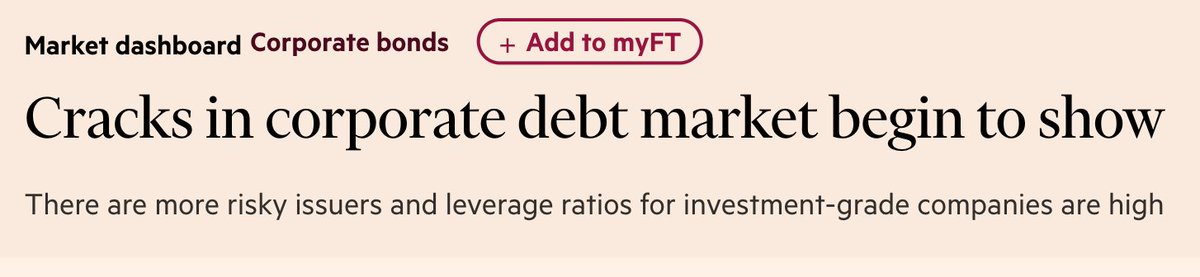
we must ask ourselves: how will investment grade credit spreads stop widening? pic.twitter.com/3q10nERGfV
— Alastair (@StockBoardAsset) December 10, 2018
''Keep an eye on Deutsche Bank. That is one sick puppy'' – @TruthGundlach $DB pic.twitter.com/lslKO8f62g
— Marc-André Fongern (@Fongern_FX) December 10, 2018

BofA Head Of Global Rates: “I Have Not Been This Worried Since 2008”
At roughly the same time Bank of America’s bearish Chief Investment Strategist, Michael Hartnett laid out 9 signals that the market has finally bottomed, and another 5 that the bottom is a lot lower, one of his BofA peers, David Woo, head of the bank’s global rates and currency and EM fixed income and econ research, revealed an even more dismal outlook, telling Bloomberg TV that he is the most worried about volatility in global markets – particularly in the developing world – since the 2008 financial crisis.
According to Woo, the Democratic takeover of the House will weaken Donald Trump’s hand on trade, making a deal with the Chinese less likely, while spurring a bruising fight over the U.S. debt ceiling. According to Woo, the ceiling will need to be raised sometime probably in the summer, but to agree to that, the Democrats will demand some kind of concession before offering the votes in the House, and it’s very possible that the two sides will have zero common ground.
Furthermore, according to the Bank of American, the 2020 election will be in full swing by that point, putting pressure on the Democrats not to deal, which is why even though the upcoming debt ceiling fight is a risk that few people are focused on, he believes it is time to start getting worried.
Looking back to the last debt ceiling crisis, in 2011, Woo notes that “brinkmanship literally took the country to the verge of default and culminated in the U.S. losing its AAA credit-rating status. That year we saw more volatility than we can remember. I think 2019 could turn out to be a little worse.”
“The only thing I’m confident in is volatility will be high next year.”
Meanwhile, it is unlikely that any of the “legacy” problems will have been resolved by then:
“We’ll have a $1 trillion budget deficit, a big fight over the debt ceiling, gridlock and the U.S. economy will be slowing at the same time,” Woo told Bloomberg TV. “That makes me very nervous.”
Separately, speaking about his core specialty, emerging markets, Woo said that he wouldn’t touch emerging markets “with a 10 foot pole”, to wit: “You want to buy EM? I wouldn’t touch EM with a 10-foot pole until there’s a resolution between the U.S. and China.” Emerging-market equities, of course, followed China into a bear market earlier this year amid the escalating trade war between Washington and Beijing.
In summary, while reluctant to make any forecasts about the coming years, Woo said that “the only thing I’m confident in is volatility will be high next year.”