The playbook is looking familiar. Frightening intelligence claims, anonymous sources, secret weapons, and warnings that the enemy could strike America at any moment.
1. The dirty-bomb scare.
CNN reported November 16 that U.S. intelligence suggested Iran was developing plans to target senior Trump officials with a dirty bomb or chemical weapons in Washington.
But buried in the report: officials disagreed about the credibility of the intelligence, and the White House said there were no credible threats to the U.S. homeland.
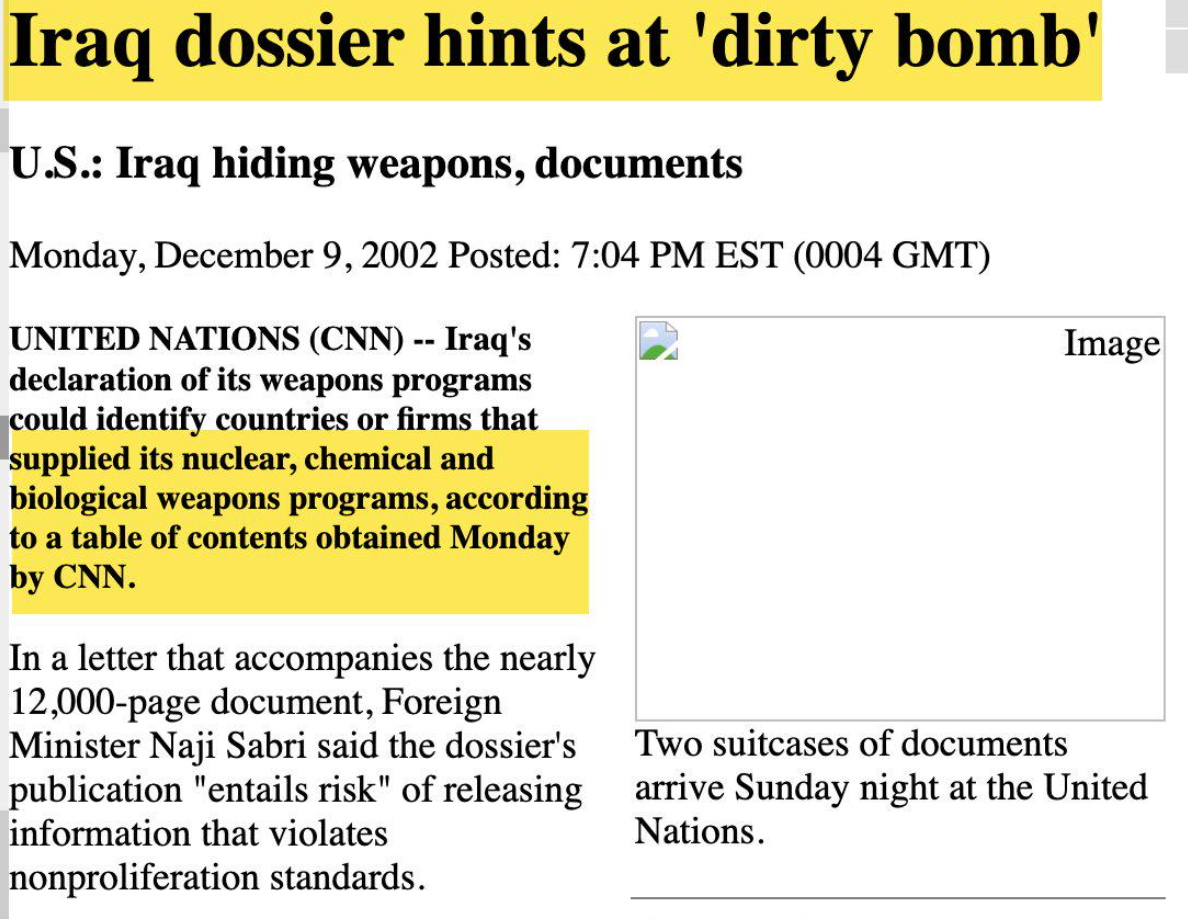
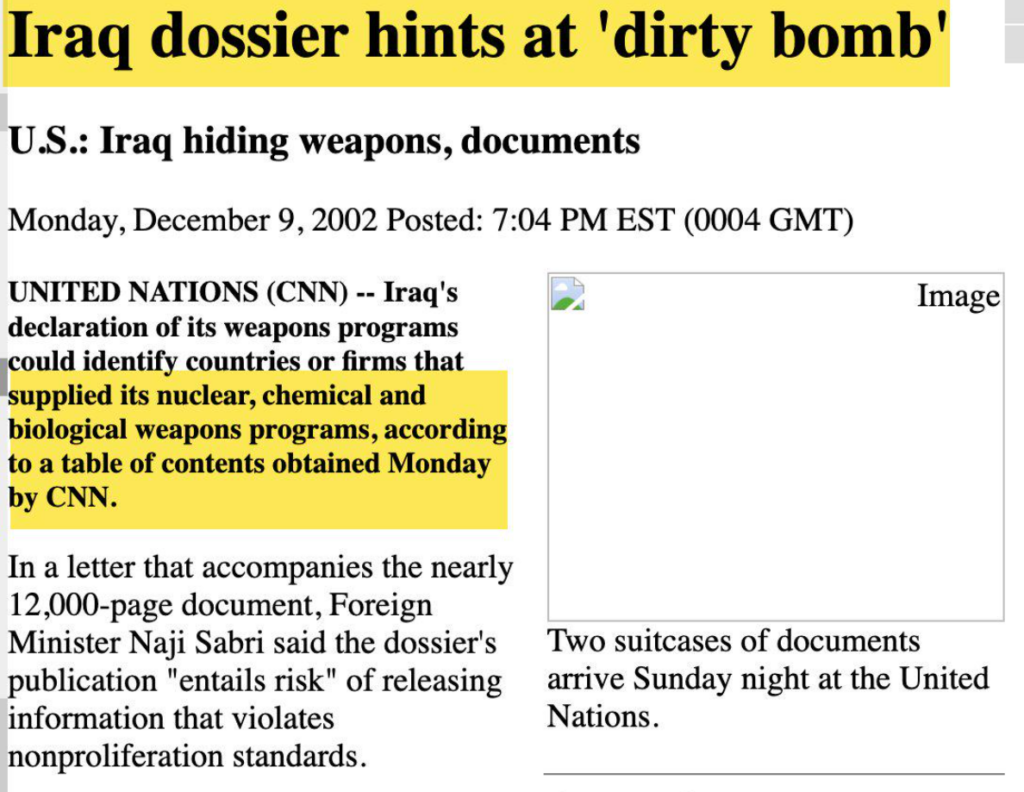
Remember Iraq? In December 2002, CNN reported intelligence suggesting Saddam Hussein had a dirty-bomb capability. The WMD claims helped sell the invasion. The central claims later fell apart.
2. Now Iranian dams are being linked to missile production.
The New York Times published a report suggesting Iran’s dam and water-transfer projects may have military purposes connected to its missile program.
The problem? The connection is speculative. Proximity to a military facility does not prove a civilian dam was built to support missiles.
This kind of reporting can help turn civilian infrastructure into a military target in the public’s mind.
3. Israel is pushing Trump to restart the war.
Axios reported November 13 that Mossad director Roman Gofman visited Washington and met senior U.S. officials. Netanyahu has been pressing Trump to resume military action against Iran. Trump has so far resisted.
There is no proof Israel supplied the intelligence behind the CNN report. But the pressure campaign to continue the war is real.
4. The nuclear threat was used to sell the war too.
The United States and Israel launched their strikes on February 28, with the Iranian nuclear and missile programs central to the justification.
But on March 2, IAEA chief Rafael Grossi said inspectors had not seen a structured Iranian program to manufacture nuclear weapons. He also rejected the idea that Iran was days or weeks away from a bomb.
That sounds familiar. Before Iraq, Americans were told Saddam had chemical and biological weapons, a revived nuclear program and secret weapons facilities. The postwar investigations found the central claims were wrong.
5. Iran is running propaganda too.
This isn’t a one-sided information war. Researchers have documented AI-generated videos, misleading footage and fake claims circulating through pro-Iran social media networks. NewsGuard identified 169 false claims about the 2026 war by November 13.
Both sides are trying to shape what people believe.
The pattern is hard to miss: secret weapons, frightening intelligence leaks, imminent threats, pressure for escalation, and claims the public cannot independently verify.
We watched this happen before Iraq. The media repeated claims that helped build support for war. Years later, much of the evidence collapsed.
Don’t wait until the next war inquiry to ask whether the intelligence was real.
https://www.cnn.com/2026/11/16/politics/us-intelligence-iran-dirty-bomb
https://www.nytimes.com/2026/11/16/world/middleeast/iran-dams-missile-sites-environmentalists.html
https://www.axios.com/2026/11/13/mossad-israel-iran-war-netanyahu-pressures-trump
https://www.dw.com/en/fact-check-iranian-disinformation-reaches-millions-on-social-media/a-79934190
If you got something out of this, please chip in to keep this site running, or subscribe to go ad-free.
8 views