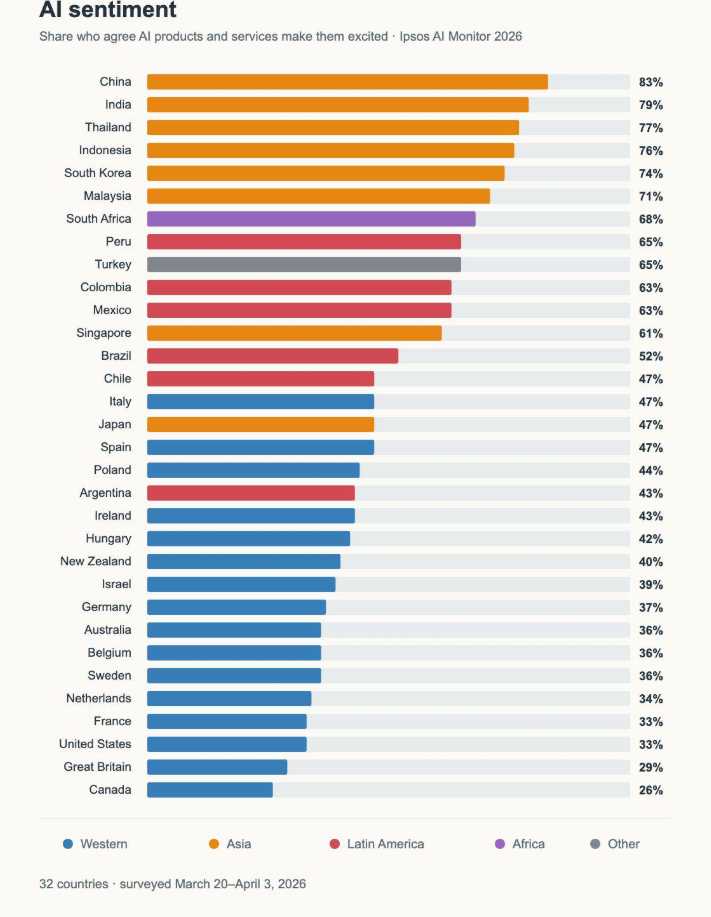
South Korea and Singapore are two good examples of why this isn’t just a rich-versus-poor country issue. Both are developed economies, both are highly connected to the global tech industry, and both have democratic institutions. Yet people there are much more positive about AI than people in the U.S. and much of Europe.
That difference could have consequences. In the West, every new AI rollout seems to bring another round of arguments over job losses, regulation, privacy and whether the technology is moving too fast. In parts of Asia, the attitude is closer to: let’s use it, build it and make sure we aren’t left behind. Of course, enthusiasm in a survey doesn’t mean people want AI replacing them at work. But public acceptance matters when companies and governments are deciding how quickly to put this technology into everyday life.
The U.S. is spending hundreds of billions on AI infrastructure. It may have the biggest companies and some of the best technology, but public resistance could make adoption harder. South Korea and Singapore show that being a developed democracy doesn’t automatically mean the public views AI with suspicion.
Got a news tip or correction? Let us know
If you got something out of this, please chip in to keep this site running, or subscribe to go ad-free.
0 views