via Peter Reagan
There’s a phrase often associated with medicine: Primum non nocere. “First, do no harm,” part of the Hippocratic Oath doctors take.
It’s a good principle. Unfortunately, medicine doesn’t always give doctors that option.
Sometimes a bone has to be rebroken so it can heal correctly. Sometimes a surgeon has to cut into healthy tissue to reach the problem underneath. The treatment causes pain because leaving the underlying problem untreated would be worse.
The important part is knowing what you’re trying to accomplish – and having some confidence that the treatment will actually get you there.
Which brings me, strangely enough, to the Federal Reserve.
Because right now, the Fed has a patient with a stubborn illness, a treatment with increasingly obvious side effects and – worst of all – no painless way forward.
The Fed’s conundrum
Congress has given the Federal Reserve what’s commonly called its “dual mandate”: maximum employment and stable prices.
The Fed defines stable prices as inflation averaging 2% over the longer run, measured by the Personal Consumption Expenditures (PCE) price index.
That’s the theory.
In practice, getting both sides of the mandate right at the same time is easier said than done.
When the economy is weak and unemployment is rising, lower interest rates can encourage borrowing and economic activity.
When inflation is too high, higher rates can restrain demand and help bring price increases back under control – but they can also limit business activity and raise unemployment.
There are actual equations economists use to model things like this.
Simple enough on a whiteboard. Real life is, well, messier.
According to Reuters, annual PCE inflation was 3.7% in July. Core PCE, which excludes food and energy and is closely watched for underlying inflation trends, was 3.3%.
Most remarkably, inflation has now remained above the Fed’s 2% target for 65 consecutive months.
For a slightly different perspective, the Bureau of Labor Statistics (BLS)’s Consumer Price Index tells much the same story. Overall consumer prices were up another 3.4% over the 12 months through July.
There’s a problem with discussing inflation as though it’s merely a rate. Inflation compounds. Prices rising 3% or 4% this year doesn’t erase the price increases families absorbed last year – or the year before that.
Your grocery bill doesn’t start over when inflation falls from 7% to 3%. Prices generally just continue rising more slowly from their already-higher starting point.
That’s why five-plus years above target matters.
And that’s why the Fed is once again talking seriously about the treatment.
The Fed says its focus is back on inflation
Earlier this week, Boston Fed President Susan Collins warned that rates may need to rise unless incoming data show more convincing progress against inflation.
She described high prices as a “pervasive” concern among the businesses and households she speaks with.
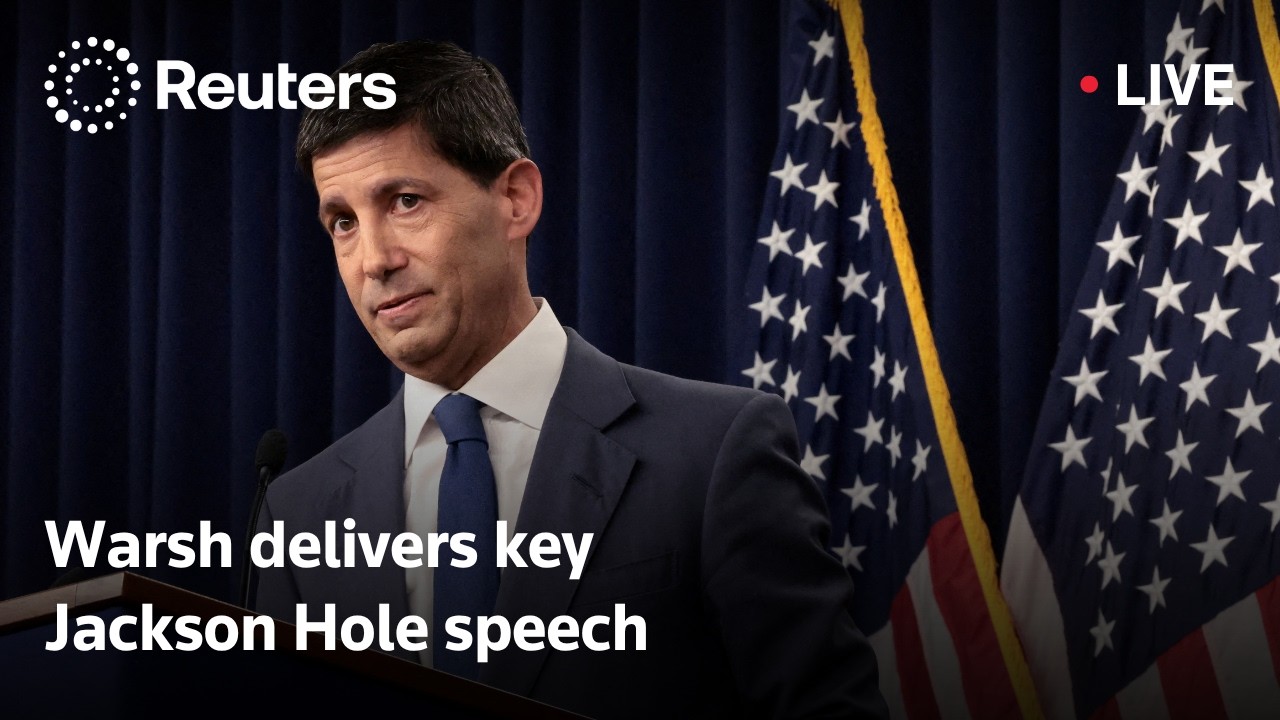
Then, on Friday, Federal Reserve Chairman Kevin Warsh made the message considerably harder to miss.
Speaking at the Fed’s annual Jackson Hole symposium, Warsh acknowledged that inflation remains too high and said:
“The Fed’s predominant focus right now should be on prices.”
Warsh stopped short of promising a rate increase. In fact, he specifically rejected the idea that policymakers should commit themselves to future decisions before seeing the data.
Reuters characterized the speech as his clearest indication yet that higher rates may be necessary if inflation fails to move convincingly toward 2%. I personally thought it was an excellent speech, but you be the judge:
And here’s what makes that decision especially interesting:
The broader economy isn’t obviously demanding help from the Fed right now.
Reuters reports that second-quarter consumer spending growth was revised higher, from 3.2% to 3.4%. Business investment has remained strong, while one economist estimated incoming data could point to third-quarter economic growth running at 3% or better.
Warsh himself described labor conditions as stable and said the economy appears to have strengthened. Those are encouraging developments.
But they also give the Fed more room to concentrate on inflation.
Unfortunately, that treatment isn’t painless…
Some Americans are already feeling the side effects
Take housing.
The Fed doesn’t directly set mortgage rates, and mortgage rates don’t necessarily move point-for-point with changes in the Fed’s short-term policy rate.
But monetary policy, inflation expectations and broader credit conditions all influence how expensive it is for Americans to borrow.
And borrowing for a home is already expensive.
Freddie Mac reported that the average 30-year fixed mortgage rate was 6.66% as of August 27.
At the same time, sales of new single-family homes fell 10.5% in July to their lowest level since January. The median (middle) price of a new home fell to $393,800 – its lowest level in four years.
Granted, new-home sales can bounce around substantially from month to month. One bad report does not mean the housing market is collapsing.
But the affordability problem is difficult to dismiss.
Let’s put the numbers in household terms.
Take that $393,800 median new-home price and assume a buyer puts 20% down. That leaves a mortgage of about $315,000.
At a 5% interest rate over 30 years, principal and interest would be roughly $1,691 per month.
At Freddie Mac’s current 6.66% average, the payment would be roughly $2,025 per month.
That’s about $333 more every month – nearly $4,000 a year – before property taxes, homeowners insurance, maintenance or any other costs of owning the house.
For some families, that’s merely inconvenient.
For others, it’s the difference between owning a home and remaining on the sidelines.
And apparently quite a few Americans are either choosing, or have no choice but, to remain on the sidelines.
Only 5.2% of respondents surveyed by the Conference Board said they intended to buy a house within the next six months (down from 6.5% the month before).
That’s a very tangible side effect.
Higher borrowing costs do help restrain inflation across the economy. But they also make one of the largest purchases an American family will ever make substantially more expensive.
There may not be a painless choice
This doesn’t mean the Fed shouldn’t raise rates. That’s important.
If inflation remains stubbornly above target, failing to respond has its own cost. Every additional year of elevated inflation chips away at the purchasing power of our paychecks and our savings.
But raising rates can impose different costs – particularly on interest-rate-sensitive parts of the economy, like housing.
That’s the dilemma.
Keep policy where it is, and inflation may remain too high for too long.
Tighten further, and borrowing could become even harder for families and businesses already struggling with today’s costs.
Of course, there’s a third possibility: Inflation could continue cooling without another rate increase.
I sure hope it does… But after 65 consecutive months above target, I don’t think “hope” is a valid economic strategy.
The most encouraging part is that Chairman Warsh seems to recognize the uncertainty. His Jackson Hole speech was unusually explicit about what policymakers know, what they don’t know and the danger of making decisions based on stale data or simplistic formulas.
It was a humble speech. And in fact, one of his observations struck me as especially relevant to everyday Americans. I’m paraphrasing, but essentially he said:
If the Fed gets inflation wrong, the biggest costs aren’t necessarily borne by the people closest to financial markets. They’re borne by ordinary families dealing with higher prices and less-secure jobs.
That’s exactly right.
Because when economists talk about a quarter-point rate change, they’re discussing an abstraction.
When you’re buying a house, financing a car, paying a utility bill or trying to make your retirement savings last another 20 years, it isn’t abstract at all.
You don’t have to predict the Fed’s next move
I don’t know whether the Fed will raise rates at its next meeting.
Neither does anyone else.
That’s not a terribly satisfying answer, but it’s the accurate one.
What I do know is that trying to build your family’s financial future around correctly predicting every Fed decision is probably a losing game.
There will always be another inflation report. Another economic surprise. Another crisis policymakers didn’t forecast six months earlier.
That’s one reason diversification matters.
Physical precious metals don’t make inflation disappear. Gold doesn’t guarantee gains, and its price can move substantially over shorter periods.
What physical gold does offer is something structurally different: a tangible asset that isn’t someone else’s liability and doesn’t depend on a central bank maintaining exactly the right interest rate.
For people concerned about preserving purchasing power over the long run, that distinction can be worth understanding.
Got a news tip or correction? Let us know
If you got something out of this, please chip in to keep this site running, or subscribe to go ad-free.
72 views