via birchgold
There are some things we expect to finance.
A house, obviously. A new car, maybe even a used one. Perhaps a new washer and dryer, if there are generous terms.
The common thread? Large, uncommon transactions. The ones that might not have a place in your household budget. They’re durable goods, as well – in some ways, it makes sense to pay for them over time because we use them over time.
Everyday transactions, though? Unless you’re just swiping a credit card to earn points, you don’t generally finance your trip to the grocery store or the gas station.
After all, the gallon of milk is long gone before the final payment comes due. It’s not like you can build equity in a carton of eggs.
So when a growing number of Americans begin using buy now, pay later (BNPL) loans to put food on the table, I think it’s worth paying attention.
This isn’t to say every person who uses BNPL is in financial trouble. These services can be convenient. Many allow users to spread purchases across several payments without interest (if they pay on time).
But groceries are different from a new television or a set of tires for your car. Groceries aren’t just a necessity, they’re a recurring purchase.
And the latest numbers suggest a truly surprising number of families are relying on BNPL to keep their refrigerators stocked…
When groceries become installment payments
According to a September LendingTree survey, 29% of Americans who have used BNPL say they’ve used it to buy groceries. That’s more than double the 14% recorded just two years ago.
Let’s be careful with that number, because I’ve seen it reported incorrectly elsewhere. It’s not 29% of all Americans are borrowing to buy groceries. It means 29% of BNPL users.
Still, the rest of LendingTree’s findings make that trend difficult to dismiss.
More than half of BNPL users – 54% – said they need these loans to make ends meet. Nearly half said they’d made a late BNPL payment within the previous year.
Now, a missed BNPL payment isn’t usually financially catastrophic on its own. Penalties and fees are quite modest compared to those charged by most credit card companies. But for someone already using short-term credit to buy groceries, any late fees, overdraft charges and another automatic withdrawal coming due can strain an already-tight household budget to the breaking point.
And LendingTree isn’t the only source seeing financial strain behind these loans.
The Federal Reserve recently examined BNPL using its nationally representative Survey of Household Economics and Decisionmaking. The Fed found that 1 in 6 U.S. adults used BNPL during 2025 – and 20% had used it for groceries or food delivery.
These numbers are truly surprising to me! Maybe I’m old-fashioned, but like I said before, in my mind, you use financing for big, unbudgeted purchases. I just don’t think of credit as a convenience. Clearly, I’m in the minority, though…
The closer I look at the details, the more upsetting they are.
Lower-income BNPL users were considerably more likely to finance groceries than higher-income users. That’s not surprising.
And among those who financed food, 43% paid a fee – either a late payment charge, or an overdraft/insufficient-funds penalty from their bank. (Frankly, I’ve never understood why banks penalize people who run out of money – if someone’s account is negative, that’s exactly the wrong time to make it more negative! They should charge insufficient-funds fees when you have money in the account! I guess that’s why I didn’t go into banking…)
The Fed’s conclusion was fairly plain: Some families are struggling to cover essential expenses. And BNPL isn’t necessarily solving that problem for them.
That’s the part that catches my attention.
Used responsibly, spreading a purchase over four or eight or 12 payments isn’t alarming.
Using short-term debt repeatedly for necessities because the household budget no longer stretches far enough?
That’s a totally different story.
It’s a blinking red light on the nation’s economic dashboard.
Inflation doesn’t have to be high to hurt
This week, the Federal Reserve itself acknowledged that the inflation problem isn’t over.
On September 16, the Fed raised its benchmark interest-rate range by a quarter percentage point to 3.75%-4.00%. In its official statement, the Fed said plainly: “Inflation remains elevated.”
I’m glad to hear them own up to it – but that plain fact is not a surprise to any American who buys groceries, or gas, or pays rent or car insurance or medical bills. Inflation has remained elevated, based on the official numbers, for at least 65 months.
Five and a half years of above-target inflation! Thanks for the news flash, Chairman Warsh.
The latest Consumer Price Index reinforces the point. According to the Bureau of Labor Statistics, consumer prices were 3.4% higher in August than they were a year ago.
But here’s something I think gets lost whenever we talk about inflation:
A lower rate of inflation does not mean prices go back down.
Inflation is the rate at which prices are rising. When inflation falls from 8% to 3%, that’s certainly an improvement. But the price increases that already happened generally don’t go away.
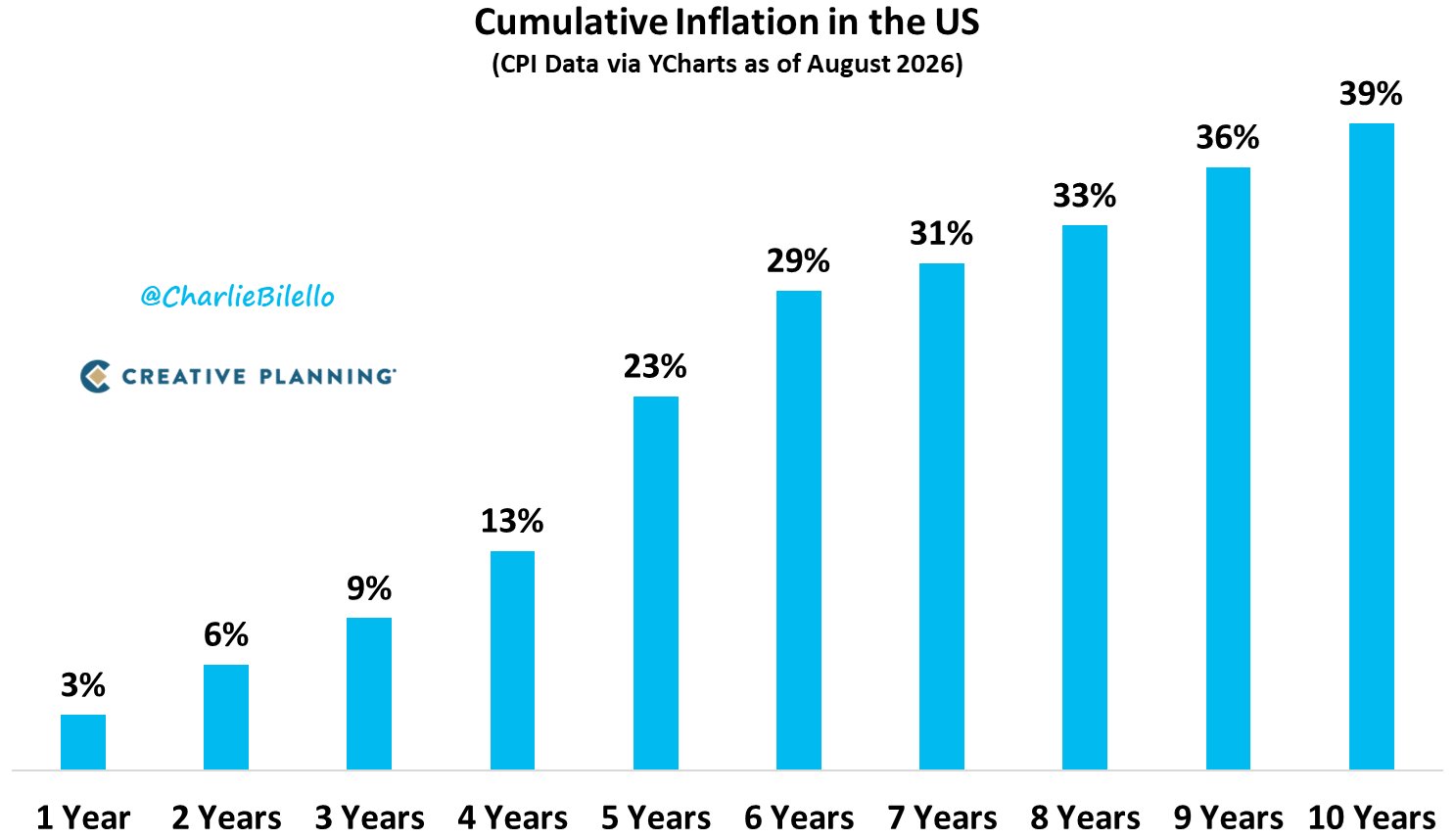
You can see that clearly in the following chart Charlie Bilello of Creative Planning put together:

Chart via Charlie Bilello on X
Overall, on average, the cost of living has risen about 30% since 2019.
Put another way, your $2,000 monthly household expenses from January 2020 would cost about $2,600 today.
Now, prices on most things haven’t doubled, thank goodness! But a 30% increase over such a short period is more than enough to wreck a family’s budget.
And that’s why the grocery-financing trend matters.
Families don’t experience inflation as a government statistic. They see the same paycheck buying fewer bags of groceries. They see fewer dollars, if any, left over after utilities, insurance, gas and phone bills are paid each month.
Inevitably, some families start looking for ways to stretch today’s income into tomorrow.
A payment plan for groceries is one of those solutions.
But my family’s doing just fine – why does this matter to me?
Two things I want you to remember, before deciding this story is irrelevant to you.
First, consumer spending has been, for decades, the #1 source of economic activity in the U.S. When people on finance media channels talk about “the economy,” or “GDP,” they’re mostly talking about consumer spending.
Consumer spending on everything from homes and tropical island vacations to Cokes and candy bars makes up over two-thirds of total economic activity. When consumer spending slows down, that’s a major recession indicator.
Need I remind you that recessions affect all of us, whether we’re just squeaking by or we’re comfortably well-off? That’s why I pay attention to stories like this one.
Second, there’s a larger lesson here for everyone saving for the future.
Inflation doesn’t just affect today’s grocery bill.
Over time, it erodes the purchasing power of every dollar you’ve set aside for your and your family’s future.
Even at the Federal Reserve’s longer-term 2% inflation goal, a dollar loses a noticeable 18% chunk of its purchasing power over a decade.
That doesn’t mean you should panic. And it certainly doesn’t mean you should chase after the riskiest asset classes in the hopes of outrunning inflation. (Believe me, a lot of people do this – and the vast majority come to regret it.)
I think there’s a simpler lesson:
Purchasing power matters.
Your savings aren’t just numbers on a statement. Some day, those dollars have to buy food, housing, transportation, medical care and all the other things you’ll need or want later in life.
That’s one huge reason many savers choose to diversify their savings with physical precious metals.
Don’t get me wrong – gold isn’t magic. The price of gold rises and falls, and it doesn’t move in lockstep with inflation from month to month or even year to year.
But physical gold has characteristics that are fundamentally different from dollars in a bank account. Gold a tangible financial asset with a limited supply, and it isn’t issued by a central bank that can just print more on a Wednesday afternoon.
For people concerned about concentrating all their savings in a financial system where purchasing power has declined significantly in just the last several years, that’s an important difference
And notice I said diversify.
Got a news tip or correction? Let us know
If you got something out of this, please chip in to keep this site running, or subscribe to go ad-free.
0 views