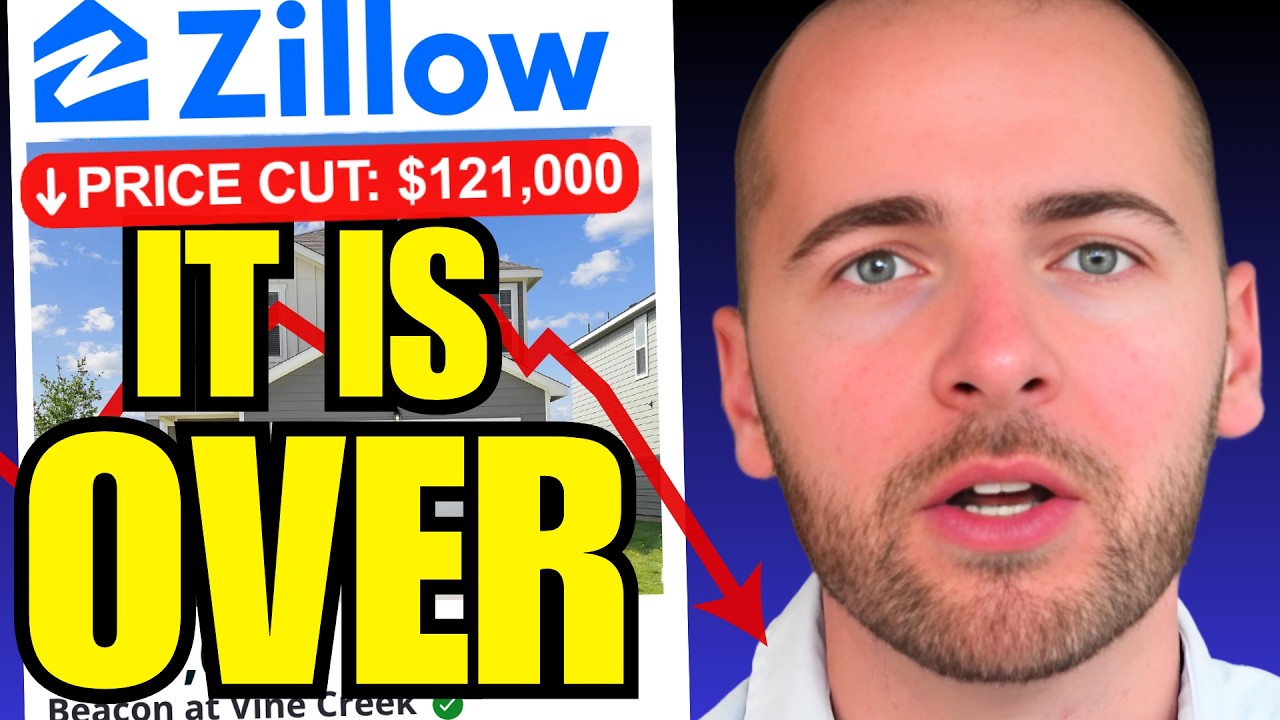
Zillow is sounding the alarm on surging Treasury yields as the 30-year Treasury hits its highest level in nearly 20 years. Higher Treasury yields are keeping mortgage rates elevated at a time when the U.S. housing market is already dealing with weak buyer demand, rising inventory, falling list prices, and some of the lowest home sales in decades.
But mortgage rates might not be the real problem. Home prices remain historically expensive compared to household incomes, with the national home value-to-income ratio around 4.3 versus a long-term average closer to 3.5. Until that affordability gap closes, home buyers could remain on the sidelines even if mortgage rates eventually decline.
In this video, I break down major price cuts happening in Nashville and Raleigh, the growing housing inventory glut across Tennessee, Colorado, Washington, North Carolina, Arizona, Texas and other markets, and why the South and West are behaving completely differently from the Northeast and Midwest. We also look at why homeowners with 3% mortgage rates are reluctant to sell—and why buyers looking at today’s 6%+ rates often think those same homes need massive price cuts.
One example in Tennessee shows the problem perfectly: the current owner has a mortgage payment around $2,900/month, while a new buyer could face a payment around $4,300/month at today’s rates. That massive payment gap is creating a standoff between buyers and sellers across the housing market.
Got a news tip or correction? Let us know
If you got something out of this, please chip in to keep this site running, or subscribe to go ad-free.
0 views