By Peter Reagan
Your News to Know rounds up the most important stories about precious metals and the overall economy. This week, we’ll cover:
- Steve Forbes on gold, the dollar and purchasing power
- Bank of America’s “two economies” problem
- Whether Russia’s wartime gold selling is weighing on prices
The dollar looks strong – but “strong” compared to what?
A strong dollar sounds like good news.
It sounds solid. Responsible. Adult, even. It sounds like the sort of thing a country should want to have, and feel proud of.
But unbacked currencies are tricky things. See, currency “strength” is almost always measured in comparison with other currencies – not in comparison with groceries, medical bills, electricity prices or the cost per gallon of gasoline.
That means the dollar can look strong against the yen, the yuan or the euro while still losing purchasing power here at home.
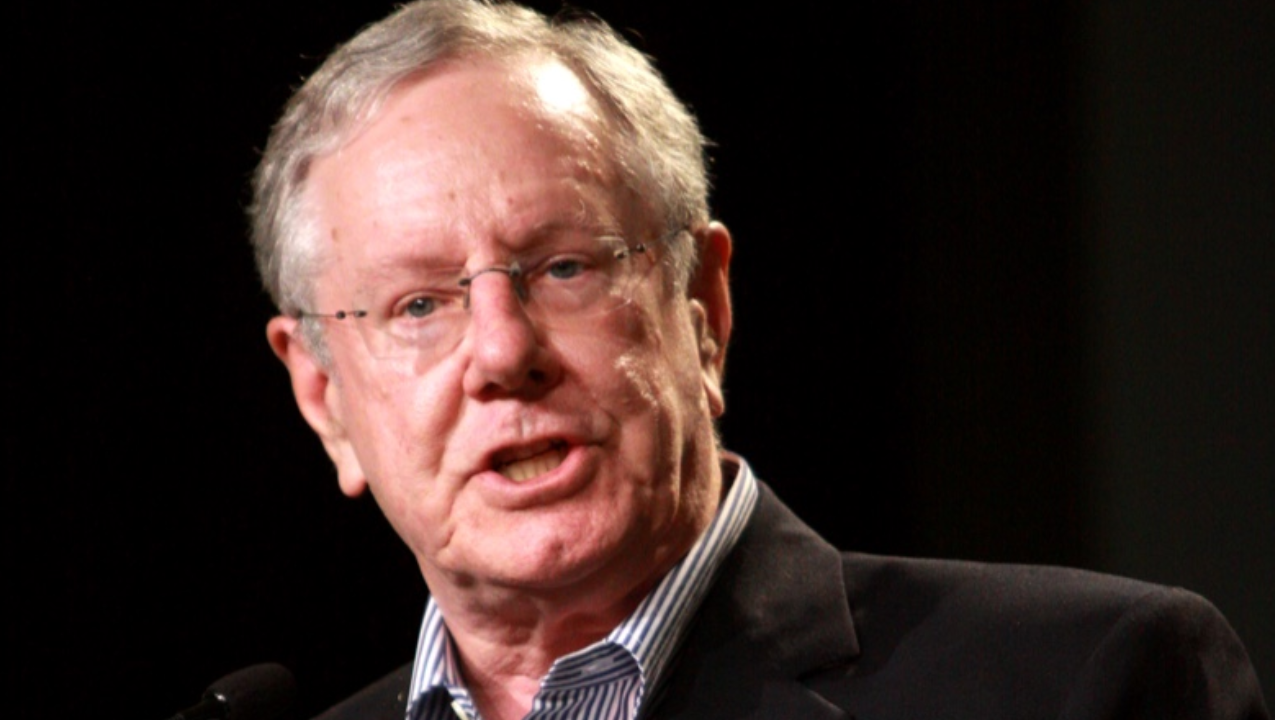
Steve Forbes recently made that point in a Forbes column about gold and the dollar (link via Yahoo Finance).
Forbes’s core argument is simple enough: Gold is one of the clearest long-term measures of a currency’s real value.
He put it memorably, describing gold as “the North Star” for measuring the value of a currency.
I think that is the right way to think about it.
Not because the price of gold rises every day. (Spoiler: It doesn’t.) Not because gold prices never frustrate owners, because, believe me, they do!
Rather, because gold has a way of cutting through the illusions around currencies.
If the dollar were truly strengthening in purchasing-power terms, you would expect your dollars to buy more goods and services over time. Yet we’ve all spent decades watching the opposite happen (even if you only really started paying attention a few years ago).
Groceries cost more. Insurance costs more. Electricity costs a lot more. Medical bills have risen even faster. Housing costs are nearly double where they were at the peak of the mid-2000s housing bubble.
Does that sound like the strengthening of the dollar to you?
However, the dollar does look impressive when compared with other currencies that are doing an even worse job. That’s why there’s no point in evaluating the dollar on its exchange rate.
To paraphrase my colleague Phillip Patrick, the dollar can be the cleanest shirt in the laundry basket and still badly need a thorough washing.
Gold’s pullback does not erase the longer story
Gold has had a rough stretch this year.
Prices fell from January’s record highs, and as we discussed above a “stronger dollar” has been one factor weighing on the metal. Higher interest rate expectations have also pressured gold (because it doesn’t pay interest, which makes the humble savings account and similar assets seem more attractive).
Now, that is the general short-term explanation you can hear on any finance news channel. To be clear, we shouldn’t dismiss it out of hand.
When the dollar strengthens, gold price often struggles. When rates are expected to stay higher, gold may look less attractive as a store of value.
According to a Reuters poll published by Yahoo Finance, analysts have trimmed gold-price forecasts for the first time since late 2023. Though most experts still expect strong support from central-bank gold buying and growing concerns over government finances.
In other words, gold’s price can fall in the short term while the longer-term reasons for owning physical gold remain intact.
As we’ve discussed, the dollar can rise against other currencies while losing purchasing power against daily necessities. A monthly price chart can look discouraging while the decades-long trends go unnoticed.
I think the trouble comes when headlines flatten all of that into one simple conclusion:
Dollar strong. Gold weak. Nothing to see here.
Nonsense. Forbes warns that a powerful dollar can produce its own risks. He points back to the mid-1980s, when dollar strength strained the entire international monetary system and eventually led Washington and other major economies to coordinate a dollar devaluation… Which led directly to Japan’s “Lost Decade” among other unintended side effects.
Now, the past never repeats cleanly. But it does rhyme often enough to make me cautious.
Today, we again have a world full of pressure points: Record high government debt across the developed world, unsettled trade relationships, volatile energy prices and other nations struggling with their own currency challenges.
A strong dollar may help American purchasing power in some imported goods for a time. It may also stress global trade, foreign borrowers and countries trying to defend their own currencies.
Eventually, Washington may decide the dollar is too strong for the system to bear.
And if that happens, savers should remember something: A currency can be talked up for years, only to be devalued very quickly.
Rate expectations are not a plan
Central bankers do rely on words. Sometimes they can move financial markets without changing policy at all (in fact, this practice is so well-known it even has its own term: Jawboning). A carefully chosen phrase in a press conference can have a big impact. Almost as much as an actual rate decision – at least for a while.
The Federal Reserve may hold rates steady. It may raise them if inflation remains stubborn. It may cut them if the economy weakens. [Update: As of July 29th, the Federal Reserve did in fact hold rates steady.]
No one knows with certainty.
That uncertainty is precisely the point.
Families should not have to base their financial future on guessing whether the next Fed move arrives in September, December or next year.
Nor should they assume any rate cut automatically solves the problem.
Lower rates make debt easier to service, but they can also encourage more borrowing and put renewed pressure on the dollar’s purchasing power. Higher rates restrain inflation, but they can also strain households, businesses and government finances.
There is no free lunch hiding inside the Fed’s policy statement.
That is why gold remains relevant.
Physical gold does not require central bankers to find the perfect rate, or communicate their intentions perfectly or even to look at the right inflation gauge at the right time.
It simply sits outside the system of promises, projections and policy pivots.
Now, all this is not a reason to panic. But it is a reason to diversify your savings.
America’s “two economies” are really one warning
Bank of America has been describing something many Americans already feel: The economy looks much stronger from the top than it does from the middle or bottom.
The Bank of America Institute has repeatedly noted a divided consumer picture. In February, it said an income-based “K” shape was opening between higher-income households and middle-income households, on top of the existing gap with lower-income households.
More recent data have shown some improvement in spending and wage growth among lower- and middle-income households, but Bank of America remained cautious about whether that narrowing would last.
That caution matters.
Averages can hide extremes.
A headline can say consumer spending is strong while many families are buying cheaper groceries, delaying repairs, skipping vacations or putting off medical care.
According to a column hosted on TradingView News, America’s “mass affluence” is structurally larger than many realize.
Higher-income households and asset owners are large enough – and spend enough – to keep the national numbers looking resilient, even while households farther down the income ladder feel squeezed.
That is not two separate economies in any literal sense.
It is one economy with very different experiences inside it.
If you are doing well, the economy may feel sturdy.
If your grocery bill, rent, insurance and utility costs have outrun your income, the same economy can feel like a treadmill speeding up under your feet.
Both experiences can be true at the same time.
That is the uncomfortable part.
AI spending can make the economy look stronger than it feels
There is another factor complicating the picture: artificial intelligence.
An economic report hosted on Yahoo Finance found economists increasingly focused on the role AI spending is playing in the global economy. One Bank of America economist described the conflict-driven energy shock as a mild stagflationary pressure, while also noting the importance of AI spending to current growth:
An economic report featured on CNBC highlights Bank of America data showing that a massive surge in AI capital expenditure is already actively supporting U.S. economic growth.
Again, that does not mean AI is useless.
It may turn out to be extraordinarily useful.
But an economy supported heavily by large technology spending can feel strange to the average household.
A data center being built somewhere in the country may add to economic growth. It may support construction, power equipment, utilities and related jobs.
But that does not automatically make groceries cheaper.
It does not reduce a retiree’s insurance bill.
It does not help a family whose rent went up again.
That is why the economy can look strong in aggregate while ordinary people remain anxious.
Growth that comes from concentrated capital spending does not always spread evenly through household life.
The national dashboard may glow green while the kitchen-table budget still flashes red.
Gold is not just a price chart in that environment
Bank of America and other institutions may debate whether gold is having a “lost year” or whether dips create opportunity.
I would step back from that phrasing.
Physical gold should not be reduced to a short-term commentary game.
It is not there to impress us every week.
It is not there to turn every headline into a price target.
Gold’s purpose is more basic: It gives savers a tangible asset outside the same financial system producing all this uncertainty.
That matters in an economy where the dollar can look strong while purchasing power erodes.
It matters when higher-income spending can make national numbers look better than many households feel.
It matters when growth depends heavily on technology spending that may or may not produce the returns its backers expect.
None of this guarantees gold’s next move.
But it explains why many families continue to consider physical precious metals as part of a diversified savings strategy.
Russia sold some gold – but that’s not the whole story
The final story this week comes from Russia.
Kitco reported that Russia’s central bank sold 44 tonnes of gold during the first half of 2026.
Note that “tonnes” refers to a metric ton, 1,000 kg (2,204 lbs). By precious metals industry standards, that’s 1,415,000 troy ounces. In other words, it’s not a trivial amount.
For comparison purposes, the World Gold Council reported that central banks globally bought a net 41 tonnes of gold in May. So Russia selling 44 tonnes over six months is large enough to notice.
Why did Russia take this step? Well, the nation is trying to fund a long war under heavy economic sanctions and is running into budget pressure. Gold is one of the few assets it can still sell, even when completely cut off from the Western financial system.
That tells us something important.
For all the theories about gold, here is a perfectly clear case of a country using bullion in the most practical way imaginable: As a reserve asset in a crisis.
I’m not making an observation about the right or wrong about Russia’s imperial aspirations. Simply pointing out gold’s economic utility. When other assets are frozen, restricted or politically complicated, physical gold still has buyers.
That is why central banks hold it in the first place.
But that raises a question: Could Russia’s gold sales have pressured prices?
Possibly. Any significant amount of physical gold entering the market affects the supply and demand dynamic. But I can’t pretend can measure the exact impact. After all, gold prices have also been influenced by the dollar, interest rate expectations, energy prices, geopolitical developments and investor positioning.
Russia’s selling is one factor among many.
I think the more interesting question is not whether Russia caused gold’s pullback. It’s why Russia still had something to sell when it needed funds.
That is the point gold owners should take note of.
Gold can be monetized (or liquidated or just plain sold) during stress precisely because it is not someone else’s obligation. Gold is one of the few a globally-recognized and prized physical assets.
That is exactly why central banks keep buying despite monthly price fluctuations. In fact, the World Gold Council’s 2026 central-bank survey found that 89% of reserve managers expect global central-bank gold holdings to rise over the next year, and a record 45% expect their own institutions to add gold to their reserves.
Seems like they don’t think gold is a bad investment…
Today’s gold price story has weak spots
Put the three stories together.
- Forbes warns that gold is still telling us something about the dollar’s purchasing power
- Bank of America’s consumer data show an economy that can look healthy in aggregate while households experience very different levels of strain
- Russia is selling gold because, under wartime pressure, bullion remains one of the few reserve assets that can still be turned into liquidity
Different stories, same lesson: Financial strength can be deceptive when measured only on the surface.
A strong dollar can still lose purchasing power. A strong economy can still leave many families behind. A falling gold price can still coexist with record central-bank demand.
That is why we must be careful with simple stories. (And it’s why I try your patience with these novel-length articles.)
- “Gold price is down” is not the same as “gold no longer matters.”
- “The dollar is strong” is not the same as “the dollar is preserving your purchasing power.”
- “The economy is growing” is not the same as “your household is financially secure.”
These distinctions matter most to those of us approaching or living in retirement.
We don’t have unlimited time to wait for policy mistakes to correct themselves, for economic downturns to turn into recoveries. We can’t always replace lost purchasing power with higher wages or a better job. We cannot assume the Fed, the White House or big banks will manage the financial system smoothly.
We need resilience. Diversifying with physical precious metals are one way American families build resilience into their savings.
Gold and silver can fluctuate in price. They do not provide income, and they aren’t a guaranteed solution to inflation or economic instability. But they are tangible, one of the few financial assets everyday Americans can own outright.
Better still, they’ve served as stores of value across human history, through wars, financial crises and the rise and fall of empires.
That is why gold remains relevant even when the dollar looks strong. Even when the economy is booming, and everything is coming up roses. Learn more about how physical gold and silver can help diversify your savings, and request your free 2026 Precious Metals Information Kit today.
Got a news tip or correction? Let us know
If you got something out of this, please chip in to keep this site running, or subscribe to go ad-free.
98 views