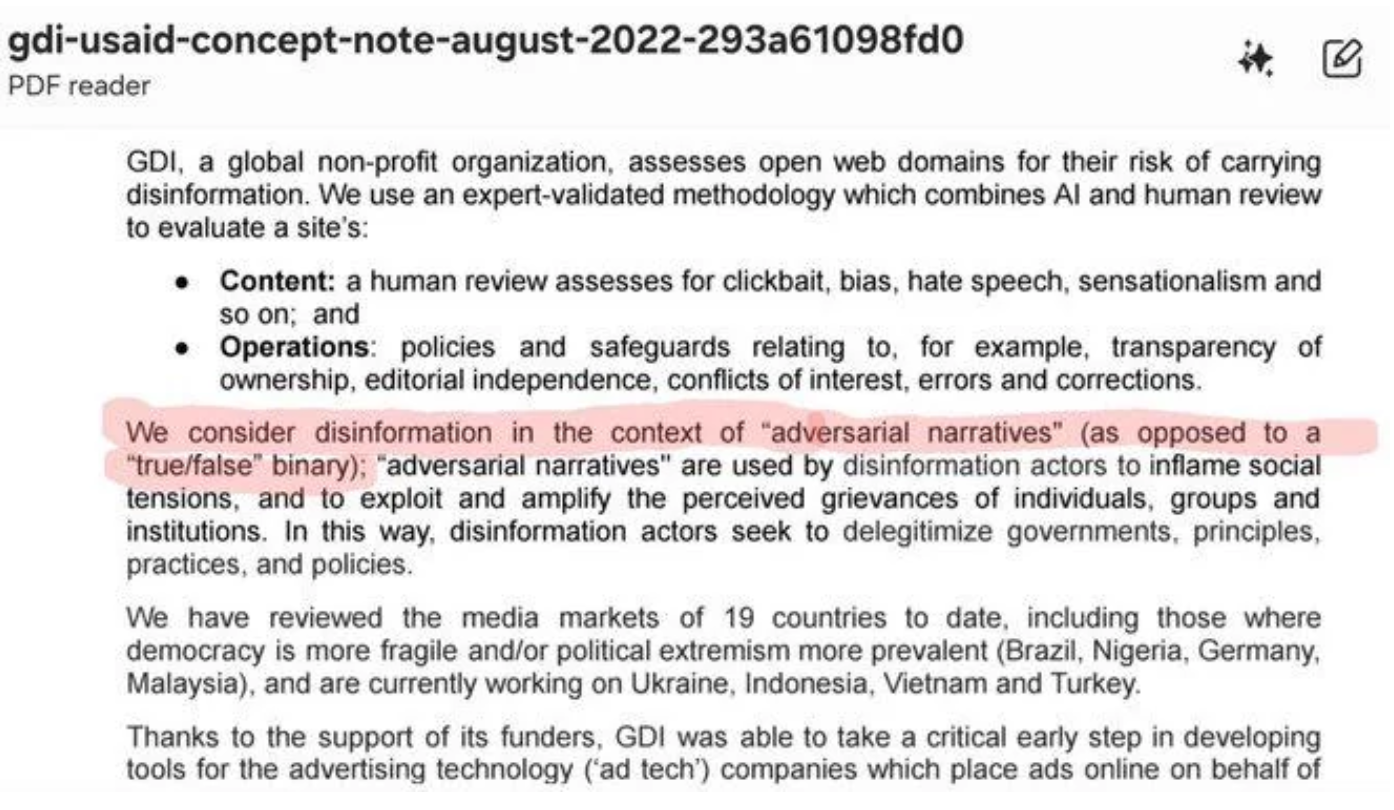
GDI co-founder Danny Rogers gave USAID staff an example using Breitbart’s coverage of crimes committed by illegal immigrants. He acknowledged that individual stories could be factually correct, but argued that collecting them together created an anti-immigrant narrative.
The facts weren’t necessarily false. GDI didn’t like the message they created.
https://www.usaid.gov/files/gdi-d-rogers-usaid-1ea6d0865e8a.pdf
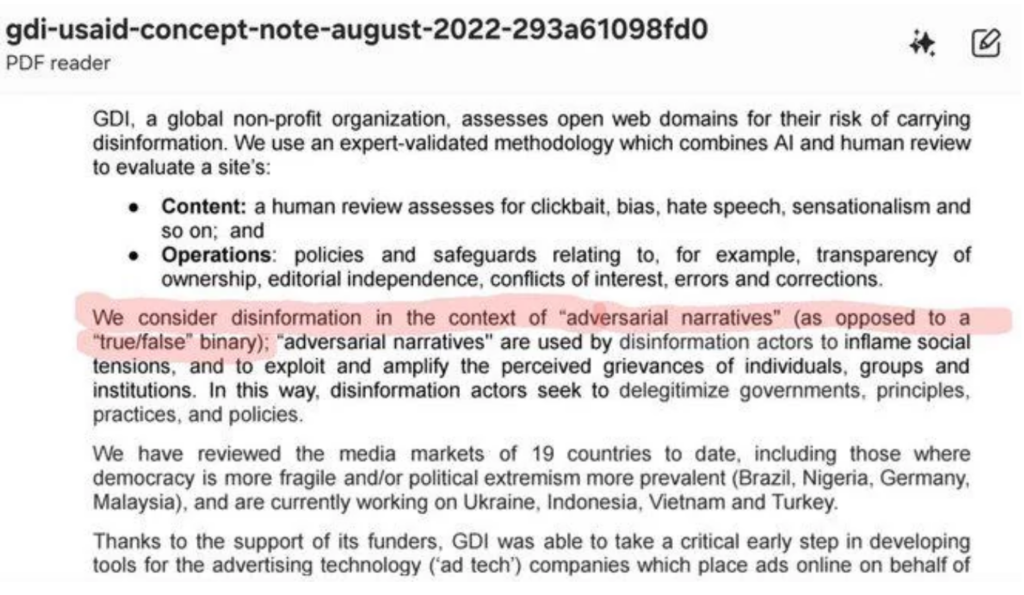
And it didn’t stop at labeling stories. In August 2022, GDI pitched USAID on a program to identify high-risk news outlets in Moldova, Zambia and Armenia, then work with platforms to cut off advertising revenue, bury their content in search results and remove them.
GDI specifically pointed to USAID’s relationships with Google and Meta as an opportunity to put the plan into action.
https://www.usaid.gov/files/gdi-usaid-concept-note-august-2022-293a61098fd0.pdf
USAID staff weren’t impressed. One called the proposal “oddly vague.” Another said, “This is not what we need right now at all.” The documents do not show that USAID funded or implemented the proposal.
https://www.usaid.gov/files/fwd-introduction-at-usaid-on-democracy-9819611720f9.pdf
But look at the thinking behind it. If a story is factually correct but creates the wrong political narrative, it can still be classified as disinformation. From there, the proposal was to go after the outlet’s money, reach and ability to publish.
Who gets to decide which true stories are too dangerous for the public to hear?
If you got something out of this, please chip in to keep this site running, or subscribe to go ad-free.
0 views