Things are getting worse.
Time to vote for the other guy.
That’s the American political routine.
Prices go up. Blame the president.
Jobs get harder to find. Blame Congress.
Rent is insane. Blame the other party.
Gas goes up. Blame the other party.
The deficit explodes. Blame the other party.
Then the election comes around and millions of people switch sides convinced this time somebody will finally fix it.
Then four years later we’re having the same argument with different campaign signs.
At some point, maybe we should stop pretending this is a new development.
Republicans and Democrats are not identical. Their policies aren’t identical. They fight over taxes, immigration, healthcare, abortion, energy, regulation, spending and foreign policy.
But look at what keeps surviving the elections.
Federal debt.
Deficits.
Interest costs.
Housing that costs a fortune.
Healthcare that costs a fortune.
Food that costs more.
Government spending that keeps climbing.
And politicians from both parties promising that their next round of policies will fix the mess.
The Congressional Budget Office projects a $1.9 trillion federal deficit in 2026. Debt held by the public is projected to reach 120% of GDP by 2036. Net interest payments are projected to climb from about $1 trillion in 2026 to $2.1 trillion in 2036.
That’s the part that doesn’t fit neatly into an election slogan.
The government can change hands.
The debt doesn’t.
The Treasury still has to refinance it.
And every dollar of old debt that gets rolled over eventually gets financed at whatever rates the market demands.
That’s why the bond market matters more than another campaign speech.
The stock market can hit records while millions of people couldn’t care less.
Pew found in July that 62% of Americans were very concerned about housing costs, 69% about healthcare costs and 66% about food and consumer goods. Only 18% said they were very concerned about how the stock market was doing.
That’s a hell of a disconnect.
Wall Street can celebrate another record.
The guy renewing his mortgage doesn’t care.
The family buying groceries doesn’t care.
The person paying 20-something percent on a credit card doesn’t care.
The small business refinancing a loan doesn’t care.
And the government itself doesn’t get to ignore interest rates.
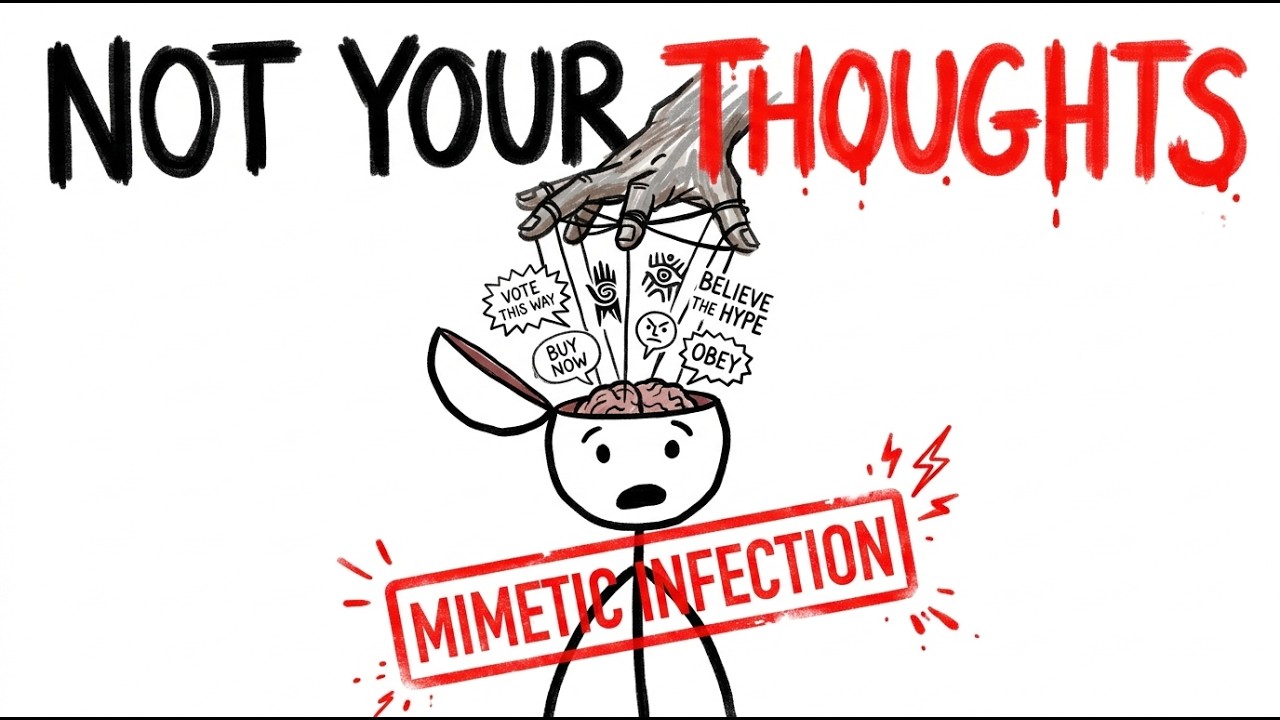
This is where the four-year puppet show starts running into arithmetic.
CBO estimates the 2025 reconciliation law increased projected deficits by $4.7 trillion over 2026–2035 after accounting for economic and debt-service effects. CBO also says the law is expected to increase economic activity, but the additional borrowing, stronger demand and modest inflationary pressure push interest rates higher.
You can argue over whether those policies were worth it.
You can argue over who benefited.
You can argue over whether the tax changes will produce more investment and growth.
Fine.
But the bill still gets paid.
And that’s where politics gets funny.
One party wins and says it inherited a disaster.
The other party wins and says it inherited a disaster.
Both sides produce charts showing why the previous administration was responsible.
Then the national debt keeps going up.
Then the next election starts.
Then everybody gets another chart.
This isn’t an argument that elections don’t matter.
They obviously matter.
The people elected to Congress decide how trillions of dollars get spent. Presidents appoint regulators, judges and agency heads. Congress changes tax laws. Policy can absolutely change people’s lives.
But there is a difference between changing policy and changing the direction of the country.
Americans keep switching the people holding the steering wheel.
The car keeps accumulating debt.
And the repair bill keeps getting larger.
Look at public opinion.
In April, 58% of Americans had an unfavorable view of Republicans and 59% had an unfavorable view of Democrats. Twenty-six percent viewed both parties unfavorably, up from 21% in 2020.
That’s not proof that the parties are interchangeable.
It is proof that a lot of people don’t particularly like either one.
And there is another number worth watching.
When Pew asked Americans in July which party they trusted more on economic policy, neither party had a clear advantage. On policies dealing with the federal budget deficit, the parties were also essentially tied.
So after decades of elections, tax cuts, tax increases, spending programs, spending cuts, stimulus packages, regulatory changes, wars, trade fights and promises to balance the budget, we’re still arguing about the same damn things.
Meanwhile, the numbers keep moving.
CBO projects federal outlays at $7.4 trillion in 2026, compared with $5.6 trillion of revenue.
That’s a $1.8 trillion gap before you even get into the arguments over which program deserves more money.
And interest isn’t a government program you can campaign against.
Once debt exists, somebody gets paid.
CBO projects interest costs alone rising to 4.6% of GDP by 2036.
That money can’t be spent somewhere else.
So eventually the political argument becomes:
Who gets the money?
Who pays more?
Which program gets cut?
Which tax gets raised?
Which benefits get reduced?
Which new debt gets issued?
There is no campaign slogan that makes those choices disappear.
That’s why I’m starting to understand the person saying:
Fuck it. I’m taking care of my family.
Not because elections don’t matter.
Not because every politician is identical.
Not because nothing ever changes.
But because after watching the same cycle repeat over and over, some people have stopped believing that changing the name on the ballot will fix the problems sitting in their kitchen, their mortgage statement and their bank account.
And you can call that apathy.
You can call it cynicism.
You can call it irresponsible.
Maybe some of it is.
But if you want people to believe in the political process, eventually the process has to produce results they can actually see.
Otherwise every election becomes the same sales pitch:
Things are terrible.
It’s their fault.
Vote for us.
Four years later:
Things are terrible.
It’s their fault.
Vote for us.
And somehow we’re surprised when people start wondering whether they’re watching politics…
or just buying another season of the same show.
Got a news tip or correction? Let us know
If you got something out of this, please chip in to keep this site running, or subscribe to go ad-free.
26 views